
A Border Collie mix is any dog with one Border Collie parent and one parent of another breed or a mix. The crosses people look for most are with the Australian Shepherd, Labrador, German Shepherd, heeler, Golden Retriever and pit bull. None of them is a breed with a standard, so nobody can promise you a puppy’s adult size, coat or personality.
What you can know is what each parent breed was bred for, how big its standard says it should be, how much exercise it needs and which health problems its breeders screen for. That’s what this guide covers for 13 common crosses, followed by lifespan, health, DNA tests and adoption.
Some mixes are planned first crosses between two purebreds. Many more are shelter dogs with Border Collie somewhere in the family tree. Either way, the Border Collie half is a herding dog bred for work. The AKC standard calls for males 19 to 22 inches tall and females 18 to 21 inches, and the AKC puts adults at 30 to 55 pounds. The Royal Kennel Club’s Border Collie profile lists the breed as needing more than two hours of exercise a day, and it sheds. Our Border Collie temperament guide covers the personality side.
Can You Predict What a Border Collie Mix Will Be Like?
Only loosely. Each puppy gets half its DNA from each parent, but which half is random, so littermates can differ a lot. Embark, a dog DNA testing company, puts it plainly: when two different purebred dogs have puppies, “the resulting litter can have a wide spectrum of looks.” Wisdom Panel notes that littermates often vary in coat color, coat length, head size and ear shape.
Behavior is even harder to call. A 2022 study in Science by Morrill and colleagues surveyed owners of 18,385 dogs and sequenced the DNA of 2,155. Breed explained just 9% of the variation in individual behavior. Herding breeds as a group did score as more biddable and more toy focused, but individual dogs varied widely.
So read every section below as what each parent brings, not as a forecast. Meeting the parents, or meeting an adult dog, tells you far more than any breed label.
Border Collie Mixes at a Glance
The table shows the other parent’s height from its breed standard, its exercise needs from the Royal Kennel Club and its median lifespan from a 2024 study of 584,734 UK dogs by McMillan and colleagues. For comparison, the Border Collie needs more than 2 hours of exercise a day and had a median lifespan of 13.1 years in the same study.
| Mix | Other parent height (breed standard) | Other parent exercise (Royal Kennel Club) | Other parent median lifespan (UK, 2024) |
|---|---|---|---|
| Border Collie x Australian Shepherd (Border Aussie) | Males 20 to 23 in, females 18 to 21 in | More than 2 hours | 13.7 years |
| Border Collie x Labrador Retriever (Borador) | Males 22½ to 24½ in, females 21½ to 23½ in | More than 2 hours | 13.1 years |
| Border Collie x German Shepherd Dog | Males 24 to 26 in, females 22 to 24 in | More than 2 hours | 11.3 years |
| Border Collie x Australian Cattle Dog (heeler) | Males about 18 to 20 in, females about 17 to 19 in | More than 2 hours | 14.0 years |
| Border Collie x Golden Retriever | Males 23 to 24 in, females 21½ to 22½ in | More than 2 hours | 13.2 years |
| Border Collie x American Pit Bull Terrier | Males 18 to 21 in, females 17 to 20 in (UKC) | Not listed | Not reported (American Staffordshire Terrier 12.5 years) |
| Border Collie x Poodle (Bordoodle) | Standard over 15 in, Miniature over 10 to 15 in, Toy 10 in or under | Up to 1 hour (Standard) | 14.0 years |
| Border Collie x Pembroke Welsh Corgi (Borgi) | 10 to 12 in | Up to 1 hour | 13.2 years |
| Border Collie x Siberian Husky | Males 21 to 23½ in, females 20 to 22 in | More than 2 hours | 11.9 years |
| Border Collie x Chihuahua | No height given; not over 6 lb | Up to 30 minutes | 11.8 years |
| Border Collie x Beagle | 13 in and under, or over 13 to 15 in | Up to 1 hour | 12.5 years |
| Border Collie x Chow Chow | Average 17 to 20 in | Up to 1 hour | 12.1 years |
| Border Collie x Pointer | Males 25 to 28 in, females 23 to 26 in | More than 2 hours | Not reported separately |
Names in parentheses are the ones used by the International Designer Canine Registry, a registry for crossbred dogs; the other crosses have no registry name. Heights are from the AKC standards, except the American Pit Bull Terrier, which the AKC doesn’t recognize, so that figure comes from the United Kennel Club (UKC) standard. A mix usually lands somewhere between its two parents, but that isn’t guaranteed.
Border Collie Australian Shepherd Mix
The Border Aussie crosses two herding breeds of similar size. The Aussie’s AKC standard describes a working dog with “the stamina to work all day” and puts males at 20 to 23 inches and females at 18 to 21, which overlaps the Border Collie range. Both breeds have medium coats and shed.
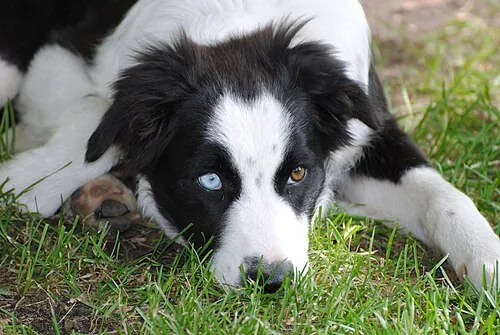
Health is where this mix needs care. Both parents can carry the MDR1 gene mutation, which makes some common drugs dangerous. Washington State University’s pharmacology lab estimates it at about 50% in Australian Shepherds and under 5% in Border Collies. The Royal Kennel Club also asks Aussie breeders to DNA test for collie eye anomaly, hereditary cataracts (HSF4) and progressive retinal atrophy (prcd-PRA), and to screen hips, elbows and eyes.
Both breeds can be merle. The Royal Kennel Club won’t register puppies from merle-to-merle matings in either breed because of the risk to sight and hearing, and the same caution applies to a cross. Our Border Collie vs Australian Shepherd comparison covers both breeds and the mix in more detail.
Border Collie Lab Mix
The Borador crosses a herding dog with a retriever. The Labrador’s AKC standard describes a retrieving gun dog with the soundness to hunt “for long hours under difficult conditions.” It’s also the bigger parent: males 22½ to 24½ inches tall at 65 to 80 pounds, and females 21½ to 23½ inches at 55 to 70 pounds.
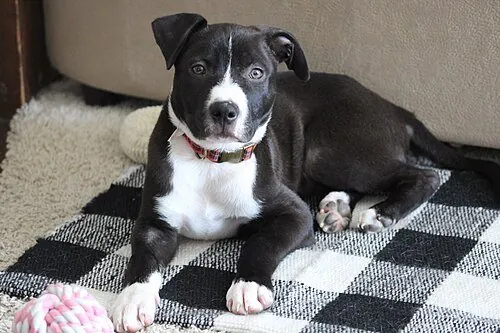
Labs have a short coat that sheds, so expect shedding whichever parent the puppy favors. The Royal Kennel Club asks Lab breeders to screen hips, elbows and eyes and to DNA test for several conditions, including exercise-induced collapse (EIC), centronuclear myopathy (CNM) and prcd-PRA.
Don’t expect the Lab side to make a calmer, easier dog. Both breeds were built to work, and both are rated at more than two hours of exercise a day.
Border Collie German Shepherd Mix
This cross pairs two herding breeds of very different sizes. The German Shepherd Dog’s AKC standard calls for males 24 to 26 inches tall and females 22 to 24 inches, taller than any Border Collie. German Shepherds come in short and long coats, and both shed.
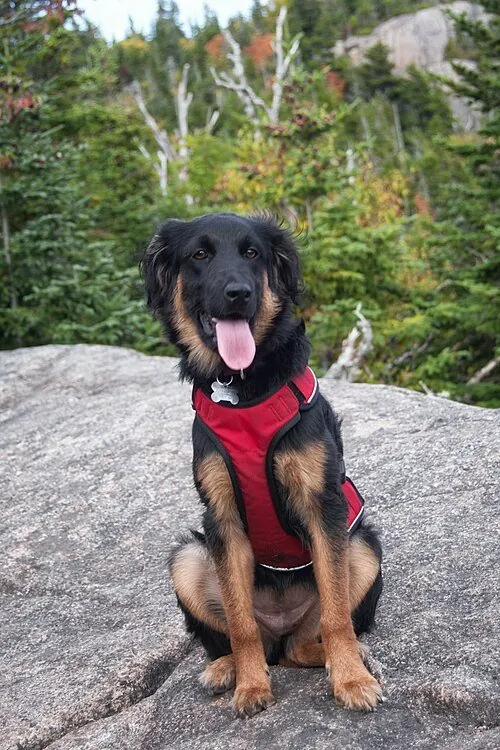
The Royal Kennel Club asks German Shepherd breeders to screen hips and elbows, with a DNA test for degenerative myelopathy (DM) and eye testing as best practice. Washington State University estimates MDR1 at about 10% in German Shepherds.
German Shepherds had a shorter median lifespan than Border Collies in the 2024 UK study, 11.3 years against 13.1. That doesn’t set how long a mix will live. With two working parents and possibly the German Shepherd’s size, this mix suits an experienced owner with time for daily training.
Border Collie Heeler Mix
A “heeler” is an Australian Cattle Dog. Blue Heeler, Red Heeler and Queensland Heeler are all names for the same breed, according to the Australian Cattle Dog Club of America. The Royal Kennel Club explains the nickname: the dogs crouch low and nip at the heels of cattle to drive them on.
The Cattle Dog’s AKC standard sets males at about 18 to 20 inches and females at about 17 to 19, a little smaller than the Border Collie. It has a short coat that sheds. The Royal Kennel Club’s suggested tests include prcd-PRA, hip and elbow screening, eye testing and BAER hearing tests for deafness.
Cattle Dogs had a median lifespan of 14.0 years in the 2024 UK study, though that figure rests on only 50 recorded deaths. Two working parents usually mean a dog that needs exercise and a job every day, so this mix suits a farm or a very active owner. The Border Collie exercise guide is a fair starting point.
Border Collie Golden Retriever Mix
The Golden Retriever was bred as a gundog, like the Labrador; its standard calls it “primarily a hunting dog.” The AKC standard asks for males 23 to 24 inches tall at 65 to 75 pounds and females 21½ to 22½ inches at 55 to 65 pounds.
Goldens have a medium-length coat that sheds and needs grooming more than once a week, according to the Royal Kennel Club. Plan on regular brushing whichever parent the coat favors. Our Border Collie shedding guide explains what to expect from the Border Collie side.
Golden breeders are asked to screen hips, elbows and eyes, including a gonioscopy check for pectinate ligament abnormality (PLA), and to DNA test for two forms of PRA and for ichthyosis.
Border Collie Pitbull Mix
“Pit bull” is a loose label rather than one breed. The UKC recognizes the American Pit Bull Terrier, but the AKC does not. The AKC’s closest breed is the American Staffordshire Terrier, whose standard sets males at about 18 to 19 inches and females at 17 to 18.
The UKC standard gives American Pit Bull Terrier males 18 to 21 inches and 35 to 60 pounds, and females 17 to 20 inches and 30 to 50 pounds. It describes a medium-sized, solidly built dog with a short, glossy coat. In height, that’s close to the Border Collie.
Pit bull ancestry is common in American dogs. In the 2022 Science study, most of whose dogs lived in the US, American Pit Bull Terrier was the most common breed ancestry the researchers found, at 9.9%. A dog labeled a Border Collie pitbull mix may carry other breeds too, which a DNA test can estimate.
Health screening depends on which “pit bull” breed is behind the dog. For the related Staffordshire Bull Terrier, the Royal Kennel Club suggests DNA tests for hereditary cataracts and L-2-HGA, plus elbow and eye screening. The UK study didn’t report pit bulls, but the American Staffordshire Terrier had a median of 12.5 years and the Staffordshire Bull Terrier 12.0 years.
Border Collie Poodle Mix
With the Bordoodle, the Poodle’s size matters most. Poodles come in three AKC sizes: Standard (over 15 inches), Miniature (over 10 to 15 inches) and Toy (10 inches or under), and the puppies’ size depends heavily on which one was used.
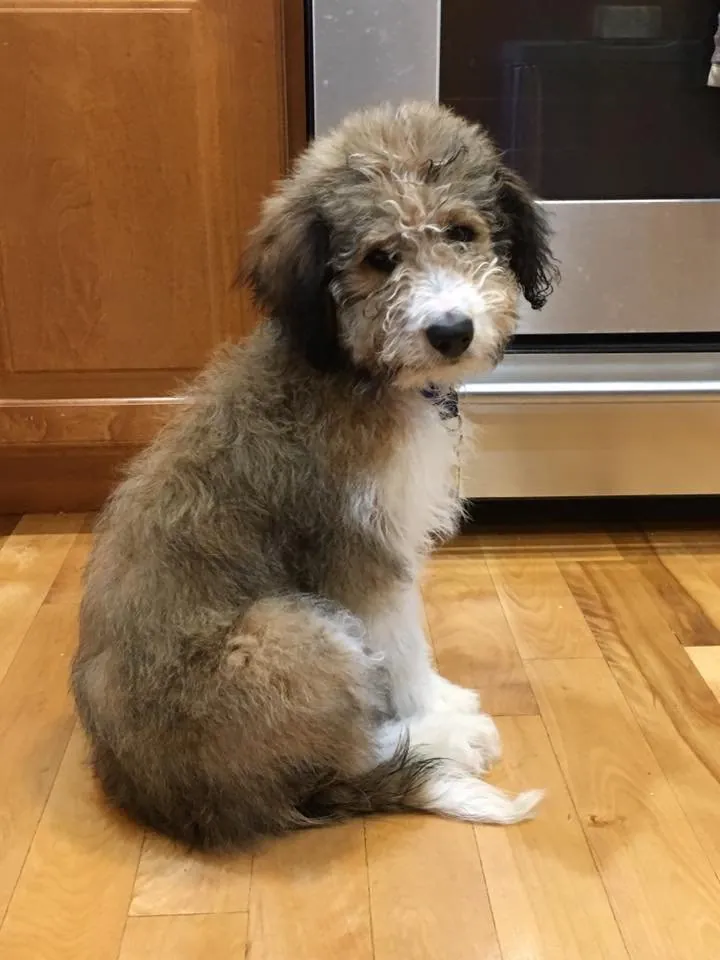
Poodles don’t shed, according to the Royal Kennel Club, but need grooming every day. A Bordoodle can inherit the Poodle coat, the Border Collie coat or something in between, so a puppy sold as low shedding may still shed. If allergies are the reason you want one, meet the adult dog first.
The Royal Kennel Club suggests Poodle breeders DNA test for two forms of PRA and von Willebrand disease (a bleeding disorder) and screen eyes and hips. Poodles had a median lifespan of 14.0 years in the 2024 UK study, tied with the Australian Cattle Dog for the highest of any parent breed here. Whichever coat the puppy gets, plan for regular grooming.
Border Collie Corgi Mix
The Pembroke Welsh Corgi is a herding breed too, but a short-legged one. Its AKC standard sets height at 10 to 12 inches, with weight up to 30 pounds for males and 28 for females. That makes the Borgi one of the least predictable mixes in size and shape: it might get the Border Collie’s long legs, the Corgi’s short ones, or something in between.
The Pembroke has a short coat that sheds, and hip screening is its only listed best-practice test. Pembrokes had a median lifespan of 13.2 years in the 2024 UK study. Both parents come from the Royal Kennel Club’s pastoral (herding) group, so plan for daily exercise and training whatever size the dog turns out to be.
Border Collie Husky Mix
The Siberian Husky is a sled dog. Its AKC standard describes a dog that pulls a light load in harness “at a moderate speed over great distances,” with males 21 to 23½ inches tall at 45 to 60 pounds and females 20 to 22 inches at 35 to 50 pounds, close to the Border Collie in height.
Both breeds shed. The AKC Husky standard allows brown or blue eyes, one of each, or parti-colored eyes. The AKC Border Collie standard accepts any eye color, though blue eyes in non-merle dogs are not preferred.
Husky breeders are asked to screen eyes, including the PLA gonioscopy check, and hips. Huskies had a median lifespan of 11.9 years in the 2024 UK study. With two parents rated at more than two hours of exercise a day, this mix fits runners, hikers and people who enjoy dog sports.
Border Collie Chihuahua Mix
This is the biggest size gap of any mix here. The Chihuahua’s AKC standard has no height range, only a weight limit: a Chihuahua may not exceed 6 pounds. A Border Collie Chihuahua mix could be small, medium or anywhere between, and you can’t tell from a young puppy. The exercise gap is just as wide: up to 30 minutes a day for the Chihuahua, more than two hours for the Border Collie.
The Royal Kennel Club asks Chihuahua breeders to eye test and is adding a breathing assessment for brachycephalic airway problems. It no longer registers merle Chihuahua puppies because of the risk to hearing and sight. Chihuahuas had a median lifespan of 11.8 years in the 2024 UK study.
Border Collie Beagle Mix
The Beagle is a scent hound. Its AKC standard has two varieties, 13 inches and under and over 13 but not over 15 inches, so a Border Collie Beagle mix could range from beagle-sized to collie-sized.
Beagles have a short coat that sheds. The Royal Kennel Club’s suggested DNA tests include Lafora disease and neonatal cerebellar cortical degeneration. Beagles had a median lifespan of 12.5 years in the 2024 UK study.
Some people choose this cross hoping for a smaller Border Collie. Size isn’t guaranteed, though, and the herding side may want far more exercise than a Beagle would.
Border Collie Chow Mix
The Chow Chow’s AKC standard describes an ancient breed of northern Chinese origin, once used for hunting, herding, pulling and guarding the home. It gives an average height of 17 to 20 inches, a bit shorter than the Border Collie.
The Royal Kennel Club says the Chow needs grooming every day and asks breeders to screen elbows, eyes and hips. Lifespan sources disagree for this breed: the Chow had a median of 12.1 years in the 2024 UK study, while the Royal Kennel Club’s breed page lists it as under 10 years.
The two parents differ a lot in exercise needs and coat care. This mix suits someone who’s happy to brush often and can meet a Border Collie’s energy if that’s the side that shows.
Border Collie Pointer Mix
The Pointer’s AKC standard describes a hard-driving hunting dog “bred primarily for sport afield.” It sets males at 25 to 28 inches and 55 to 75 pounds and females at 23 to 26 inches and 44 to 65 pounds, the tallest parent breed in this guide.
Pointers have a short coat that sheds, and hip screening is the Royal Kennel Club’s only listed best-practice test for them. The 2024 UK study didn’t report the Pointer separately; the Royal Kennel Club lists its lifespan as over 12 years. With both parents rated at more than two hours a day, a Border Collie Pointer mix will likely need a lot of daily exercise.
What Do Border Collie Mix Puppies Look Like?
Border Collie mix puppies can look like the Border Collie, the other parent, or neither, and one litter can hold a wide mix of looks. Size, coat and color all vary. If the other parent is a mix itself, the range gets wider still.
The 2022 Science study found most mixed-breed dogs aren’t simple two-breed crosses. Only 17% were a mix of just two breeds, and 66% carried at least 5% ancestry from four or more breeds. A shelter puppy labeled “Border Collie mix” may have far less Border Collie in it than the name suggests.
For a rough size forecast, look at both parents. The guide to how big Border Collies get covers growth and adult size for the Border Collie side. Coat color follows its own genetic rules, which our Border Collie colors guide explains.
How Long Do Border Collie Mixes Live?
No study has measured lifespan for any single Border Collie mix, so there is no real number for a Border Collie Lab mix or a Border Aussie. The research does give the lifespan of each parent breed and of crossbreeds as a whole.
| Study | Dogs studied | Border Collie | Crossbreeds | Purebreds |
|---|---|---|---|---|
| O’Neill et al., The Veterinary Journal, 2013 | 5,095 deaths among 102,609 dogs at English vet practices | Among the longest-lived breeds | Lived 1.2 years longer than purebreds, after adjusting for other factors | Shorter-lived than crossbreeds |
| Teng, O’Neill et al. (VetCompass), Scientific Reports, 2022 | 30,563 dogs that died under UK vet care | 12.1 years life expectancy | 11.8 years life expectancy | Varies by breed |
| McMillan et al., Scientific Reports, 2024 | 584,734 UK dogs | 13.1 years median | 12.0 years median | 12.7 years median |
The studies disagree on whether crossbreeds outlive purebreds. In 2013, O’Neill and colleagues found crossbred dogs lived 1.2 years longer than purebreds after allowing for other factors, and said this supported the idea of hybrid vigor. The much larger 2024 study found the opposite: crossbreeds had a median of 12.0 years against 12.7 for purebreds, and 47.1% of purebred breeds had a longer median than crossbreeds.
Body size matters too. The 2013 study found lifespan fell as body weight rose. A mix with a long-lived parent, such as the Poodle or Australian Cattle Dog, may have better odds than one with a shorter-lived parent like the German Shepherd, but keeping any dog lean and well cared for counts for a lot. The Border Collie lifespan guide covers what you can do to add healthy years.
Are Border Collie Mixes Healthier Than Purebreds?
Sometimes, for some conditions, but not across the board. The idea that crossing breeds makes healthier dogs is called hybrid vigor, and the evidence for it is mixed.
The clearest study comes from UC Davis. Bellumori and colleagues reviewed records of 27,254 dogs with one of 24 inherited disorders, published in the Journal of the American Veterinary Medical Association in 2013. They found:
- 13 disorders were no more common in purebreds than in mixed breeds, including hip dysplasia and several cancers.
- 10 were more common in purebreds, including elbow dysplasia, cataracts and hypothyroidism.
- 1, a ruptured cranial cruciate ligament, was more common in mixed-breed dogs.
The dogs were patients at a university teaching hospital, which may not reflect dogs in general. And a mix can still inherit a problem both parent breeds carry. MDR1 is a good example: Border Collies, Australian Shepherds and German Shepherds can all carry it, and Washington State University estimates it at about 10% in herding-breed crosses.
In practice, treat a mix as at risk for the problems of both parent breeds. Our list of common Border Collie health problems covers the Border Collie side.
Can a DNA Test Tell If Your Dog Is a Border Collie Mix?
Yes, a dog DNA test can estimate how much Border Collie your dog has. Companies such as Embark and Wisdom Panel sell cheek-swab kits you mail back to the lab. Wisdom Panel, for example, says its Premium test screens for more than 430 breeds.
The results are estimates, and they tell you about ancestry, not personality. Remember the Science study: breed explained only 9% of differences in behavior.
For a herding mix, the most useful result may be the health screen. Wisdom Panel’s Premium test lists more than 270 health tests, and its kits include an MDR1 test. An MDR1 result tells your vet whether drugs such as ivermectin at high doses and loperamide need extra care.
Adopting a Border Collie Mix
Shelters and rescue groups are a good place to find a Border Collie mix. Adopting an adult has one real advantage: you can see the dog’s size, coat and energy level instead of guessing.

Ask the rescue how the dog behaves on walks, with other dogs and when left alone. If the dog shows herding behavior, such as stalking, circling or nipping at heels, plan for training and plenty of exercise.
Some Border Collie rescues also place mixes, so it’s worth asking. Our Border Collie rescue directory lists groups by state.
Border Collie Mixes FAQ
How long does a Border Collie Lab mix live?
No study has measured the Border Collie Lab mix itself. Both parents had the same median lifespan, 13.1 years, in a 2024 study of more than 580,000 UK dogs, and crossbreeds as a group had a median of 12.0 years. Whatever the mix, keeping your dog lean and getting regular checkups still matter.
What is the smallest Border Collie mix?
Crosses with very small breeds, such as the Chihuahua (6 pounds or less by its AKC standard) or a Toy Poodle (10 inches or under), have the smallest parent. That doesn’t make the puppies small. They can grow to anywhere between the two parents, so meet both parents or choose an adult dog if size matters.
Do Border Collie mixes shed?
Most do. The Border Collie sheds, and so do most of the breeds it’s commonly crossed with, including the Labrador, Golden Retriever, German Shepherd and Husky. A Poodle cross may shed less if it inherits the Poodle coat, but there’s no guarantee.
Are Border Collie mixes good family dogs?
Some are and some aren’t, because breed explains only a small share of how an individual dog behaves. If the dog takes after the Border Collie side, it may need more than two hours of exercise a day. An adult dog that has lived in a foster home lets you see how it behaves with kids before you commit.
Are Border Collie mixes easy to train?
Border Collies are a herding breed, and in the 2022 Science study herding breeds scored as more responsive to commands on average. Individual dogs varied widely, though, and a mix may take after the other parent instead. Start training early and keep sessions short and fun.