
This is Part 4 of our series on adopting a Border Collie.
Border Collie training works best with short, reward-based sessions, a clear order of basic commands and plenty of daily mental work. These dogs learn new cues fast, often in a handful of tries. The hard part is that they also learn your mistakes just as fast, so structure matters more than raw talent.
Start with the basics below, keep sessions to a few minutes, and give your dog a job to do every day. Everything else builds on that.
Are Border Collies Easy to Train?
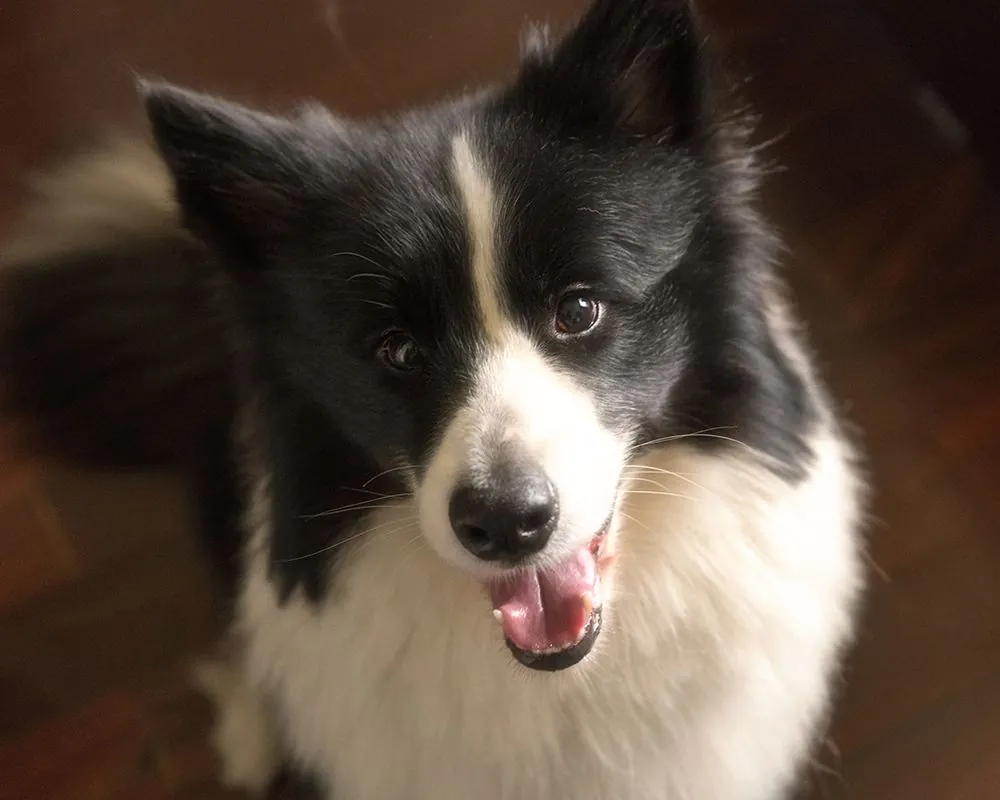
Yes and no. Border Collies are quick to pick up new behaviors because they were bred to watch a shepherd and respond to small signals at a distance. Working dogs still take directions by voice and whistle from far across a field, as the Border Collie entry on Wikipedia describes. That same focus can turn into problems when nobody gives it a direction.
A bored Border Collie will train itself. It may learn that barking at the window makes the mail carrier leave, or that circling the kids makes them squeal. So the honest answer is that the dog is easy to teach, but you have to be consistent and give it enough to do.
If you are still deciding whether the breed fits your life, read about Border Collies as a first dog before you commit.
Why Positive Reinforcement Works Best
Positive reinforcement means you reward the behavior you want, usually with food, toys or play, so your dog does it more often. The American Veterinary Society of Animal Behavior says in its position statement on humane dog training that reward-based methods should be used for training, and that aversive tools and punishment should not. AVSAB also found no evidence that aversive methods work better in any setting.
This matters even more with a sensitive herding breed. Many Border Collies shut down or get anxious after harsh corrections. Rewards keep them eager to try again, and an eager Border Collie learns very fast.
A few habits make rewards work well:
- Keep small, soft treats in a treat pouch on your belt so you can pay your dog within a second or two.
- Use a marker word like “yes,” or a training clicker, at the exact moment your dog does the right thing.
- Mix in toys and tug. Many Border Collies will work harder for a ball than for food.
- Stop while your dog still wants more. Three to five minutes is plenty for a puppy.
What Is the Best Age to Train a Border Collie?
The best age to start training a Border Collie is the day you bring it home. Puppies can learn simple cues like sit and their name at 8 weeks old. AVSAB’s puppy socialization statement says the first three months of life are the most important window for socialization, and that puppies can usually start classes at 7 to 8 weeks once they have had at least one round of vaccines. Ask your vet when your puppy is ready.
Adult and senior dogs can learn too. Age changes how long sessions should last, not whether the dog can learn. Our Border Collie puppy guide covers the first weeks at home in more detail.
The First Commands to Teach (in Order)
Teach these in roughly this order. Each one makes the next easier, and together they cover most of daily life with a Border Collie. Keep a running list as you go and say each cue only once.
1. Name
Your dog’s name should mean “look at me, something good is coming.”
- Say your dog’s name once in a happy voice.
- The moment it looks at you, mark and reward.
- Repeat five or six times, then stop.
- Practice in new rooms, then outside.
Still picking one? Short names with clear sounds work well, and our list of Border Collie names has plenty of ideas.
2. Sit
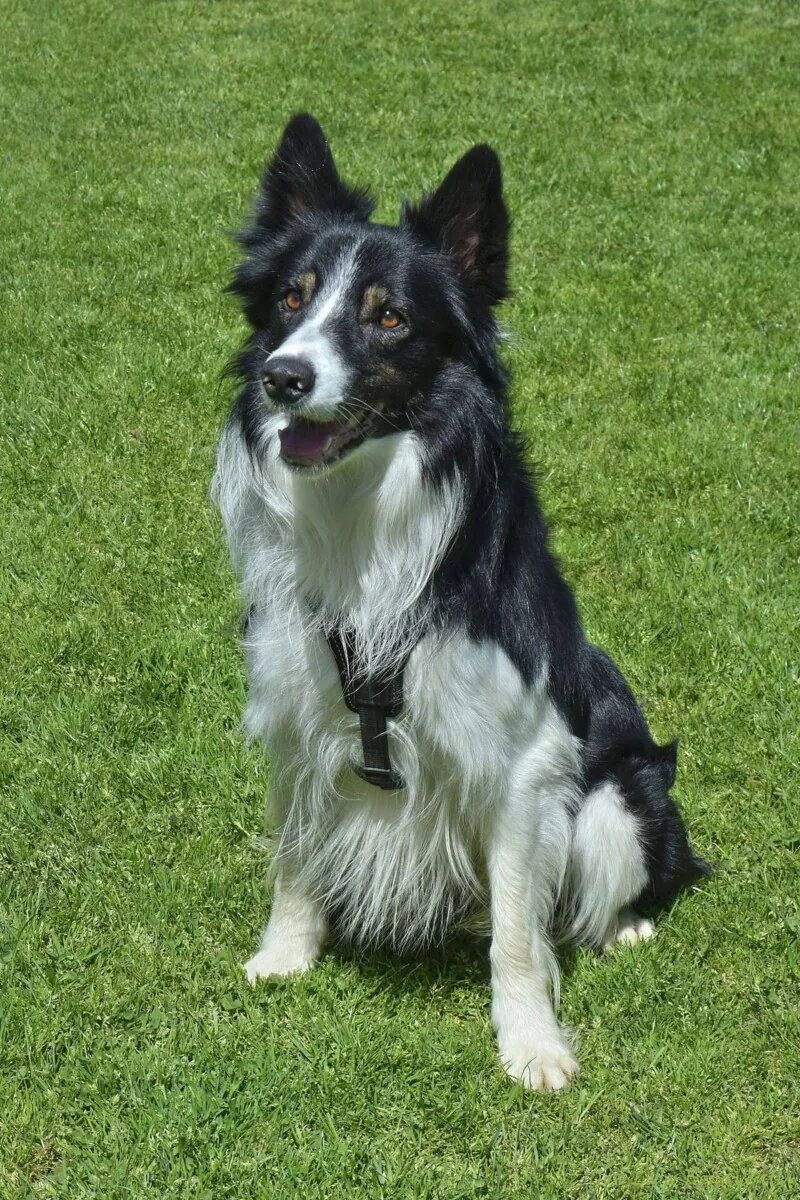
- Hold a treat at your dog’s nose.
- Slowly lift it up and back over the head.
- When the rear end touches the floor, mark and reward.
- Add the word “sit” once your dog sits as the hand moves.
3. Down
- Start with your dog sitting.
- Lower a treat straight down to the floor between the front paws.
- Slide it slowly away along the floor.
- Mark and reward the moment the elbows touch the ground.
4. Stay
- Ask for a sit or down.
- Say “stay” and hold up a flat hand.
- Wait one second, then mark and reward while your dog is still in place.
- Build up time first, then distance, then distractions. Change only one at a time.
5. Come (Recall)
- Start indoors, a few feet away.
- Say your dog’s name and “come” in a cheerful voice, and back up a step or two.
- Reward with something great when your dog reaches you.
- Never call your dog to you for something it dislikes, like a bath or the end of a walk.
6. Leave It
- Hold a treat in a closed fist and let your dog sniff it.
- The moment it backs off, mark and reward from your other hand.
- Add the cue “leave it” once your dog backs off fast.
- Move up to a treat on the floor under your foot, then to things on walks.
7. Drop It
- Play tug with a toy.
- Stop moving the toy, hold a treat near your dog’s nose and say “drop it.”
- When the toy falls, mark, reward and then give the toy back.
- Giving the toy back teaches your dog that dropping it does not end the game.
8. Wait at Doors
- Walk to a door with your dog on leash.
- Put your hand on the handle. If your dog moves forward, take your hand away.
- Open the door a crack only while your dog holds still.
- Say “okay” to release it through the door, and reward.
A door wait is a safety skill. It stops a fast dog from bolting into the street when a door or car hatch opens.
How to Train Recall and Leash Manners
Recall is the command most likely to save your Border Collie’s life. These dogs can spot a squirrel, a jogger or a car and be gone before you finish saying their name.
Practice recall on a long training lead of 15 to 30 feet in open spaces before you ever trust your dog off leash. Call it back many times per walk, reward, and then let it go back to sniffing. Your dog learns that coming back does not mean the fun is over.
For loose leash walking, stop moving the moment the leash goes tight. Start again when there is slack, and reward your dog for walking near your leg. It is slow at first. Most Border Collies get the idea within a week or two of daily practice.
Herding, Nipping and Chasing Cars or Kids
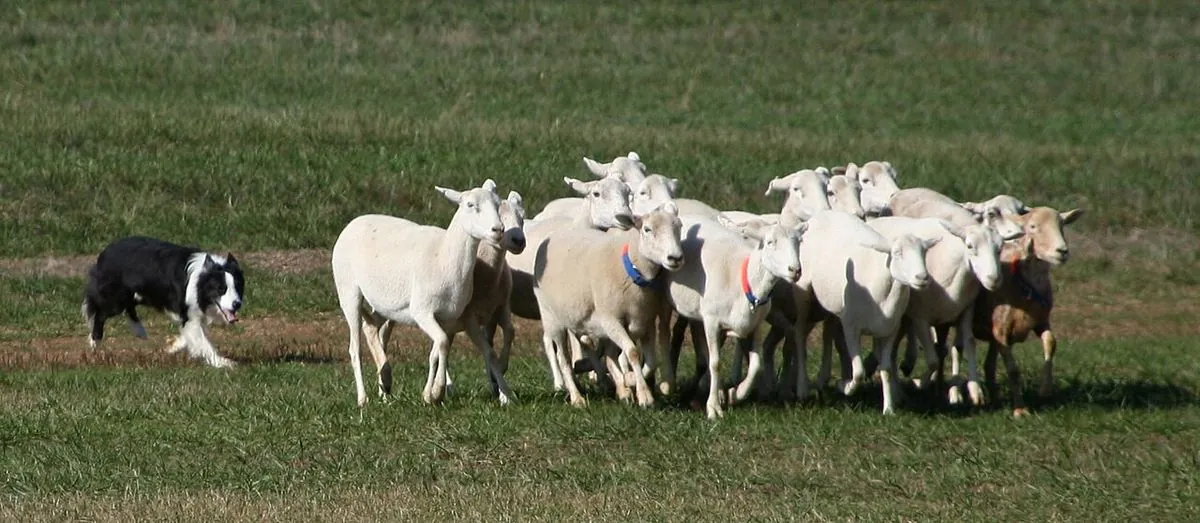
Herding behavior is normal for a Border Collie. Stalking, staring, circling and nipping at heels are all parts of the herding sequence. You can’t train the instinct out, but you can control where it goes.
- Stop the game when your dog circles or nips at kids, and calmly put it on a leash or in another room for a minute.
- Teach kids to stand still and fold their arms rather than run and scream when the dog gets excited.
- Give the instinct a legal outlet with herding balls, flirt poles and fetch. Our picks of the best toys for Border Collies include several herding toys.
- Train a strong “leave it” and “look at me” around moving things, starting far away from traffic and getting closer only as your dog stays calm.
- Never let a car chaser practice off leash. Each chase it gets away with makes the habit stronger.
Some Border Collies are put to work on this drive. The breed has been used to clear wild birds from airports and golf courses, which is why you will see them in wildlife management work. Pet dogs need a smaller version of that outlet every day.
Crate and Potty Training Basics
A crate gives your Border Collie a safe place to rest and helps with house training. Pick one big enough for your dog to stand up, turn around and lie flat. Never use the crate as punishment.
To crate train, feed meals in the crate with the door open, then close it for a few minutes while you sit nearby. Add time slowly. Pair crate time with a chew or stuffed food toy so the crate predicts something good.
For potty training, take your dog to the same outdoor spot at these times:
- First thing in the morning and last thing at night
- Right after waking from a nap
- After meals and drinks
- After play sessions
- Whenever it starts sniffing and circling indoors
Reward right there, the second your dog finishes. If you find an accident, clean it with an enzyme cleaner and don’t scold. Scolding after the fact teaches your dog to hide from you, not where to go.
Adult rescues often need potty training too. Many came from kennels, farms or outdoor homes and have never lived indoors. Treat a new adult like a puppy for the first few weeks, with frequent trips outside and close supervision, and most catch on quickly.
Training an Older or Rescue Border Collie
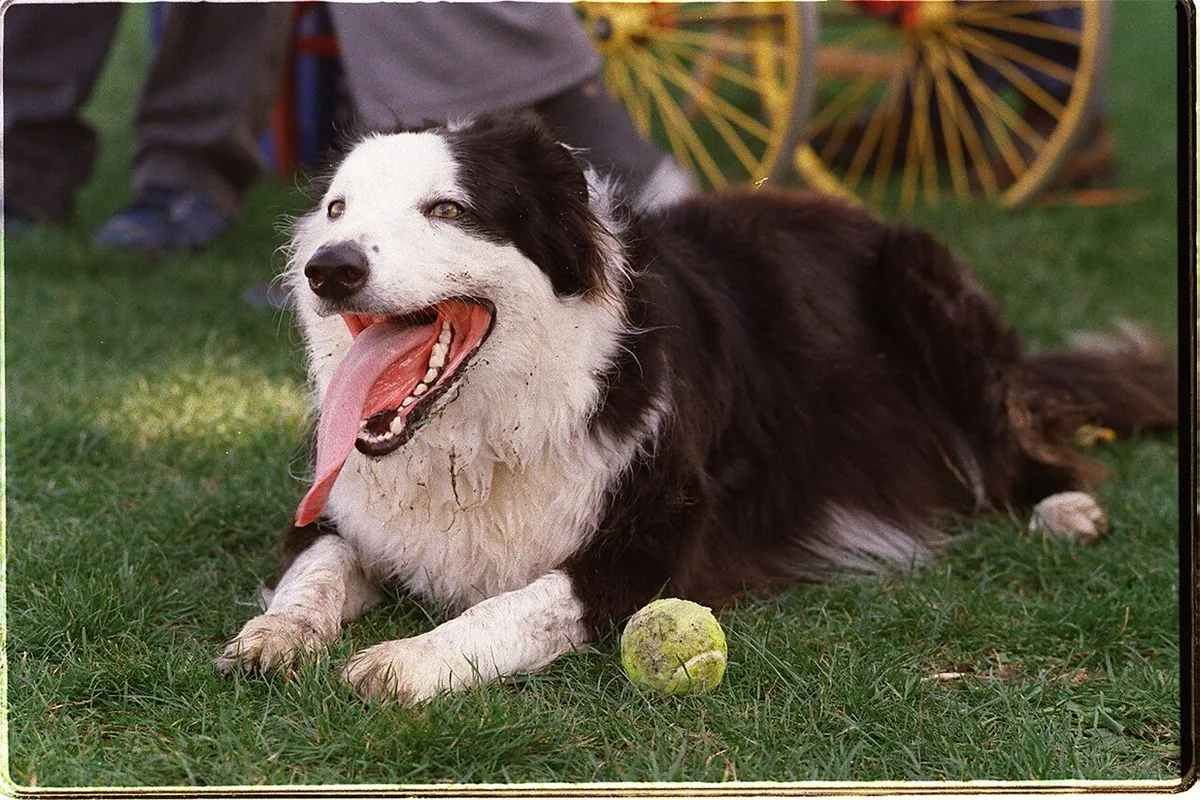
An older Border Collie can learn as much as a puppy. It may just need to unlearn a few things first. Give a newly adopted dog a few days to settle before formal lessons, and use that time to learn what it likes.
Keep these points in mind:
- Start with name and recall. They build trust and a working relationship.
- Watch for fear signs such as lip licking, yawning, a tucked tail or turning away. Back off and make the task easier.
- Shorten sessions for seniors and avoid hard jumps on aging joints.
- Expect some quirks, like sound sensitivity or fear of men or hats. Work on them slowly with distance and rewards.
- Don’t assume a former working dog knows house manners. Farm dogs often know “lie down” but not “off the couch.”
The Border Collie rescues you adopt from can usually tell you what the dog already knows, so ask before you start.
Mental Work and Border Collie Tricks
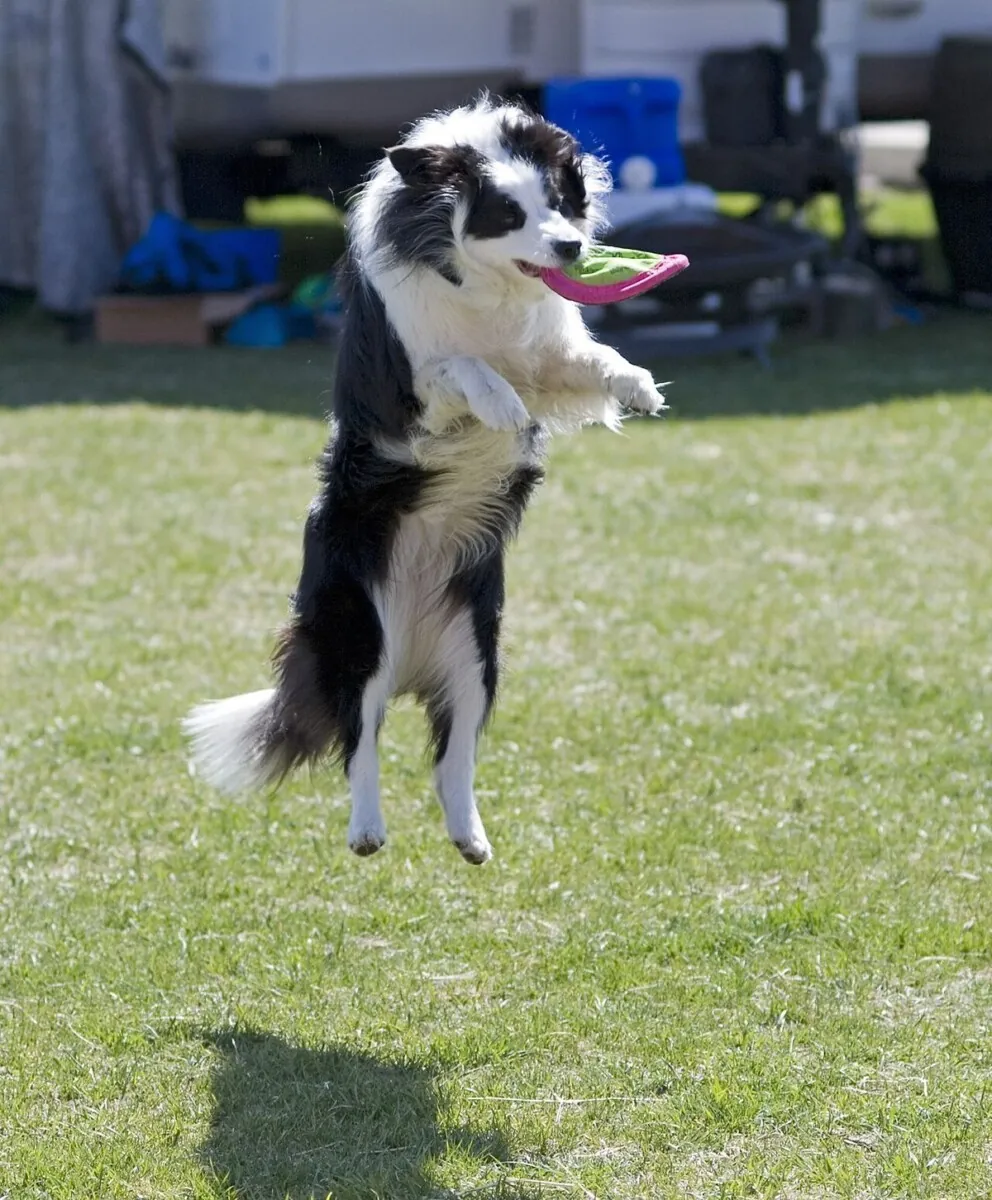
Physical exercise alone rarely tires out a Border Collie. Ten minutes of brain work can do as much as a long walk. Pair training with the routine in our guide to how much exercise a Border Collie needs.
Good tricks to teach once the basics are solid:
- Shake and high five
- Spin left and right (use two different words)
- Play dead
- Back up
- Touch your hand with its nose
- Put toys away in a basket
- Learn toy names, one at a time
- Weave through your legs
- Bow
Puzzle feeders, scent games and “find it” with treats hidden around the house also count as mental work. A dog that gets this daily is less likely to invent its own jobs, like nonstop barking. If noise is already a problem, read why Border Collies bark and how to curb it.
Dog Sports for Border Collies
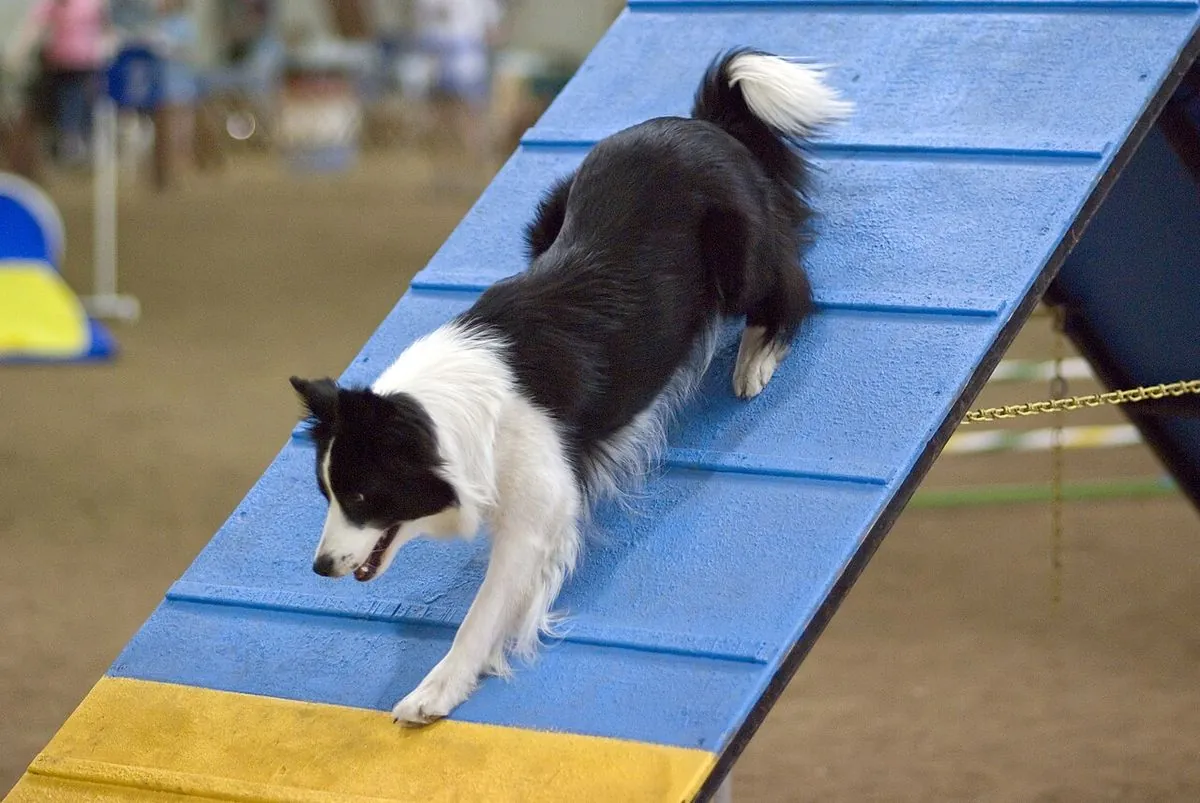
Dog sports give a Border Collie a real job and give you a structured way to keep training. Most clubs offer beginner classes.
| Sport | What your dog does | Good for |
|---|---|---|
| Agility | Runs an obstacle course of jumps, tunnels and weave poles | Fast, athletic dogs and handlers who like to move |
| Herding trials | Gathers, drives and pens sheep or other livestock under your direction | Dogs with strong herding drive |
| Flyball | Races over hurdles, triggers a box that releases a ball, and races back | Ball-crazy dogs who enjoy a team setting |
| Disc dog | Catches thrown flying discs, sometimes in choreographed routines | Dogs with high toy drive and sound joints |
| Treibball | Pushes large exercise balls into a goal on your cues | Dogs who want to herd but have no access to livestock |
Wait until your vet says your dog’s growth plates have closed before starting high-impact jumping in agility, flyball or disc.
Common Border Collie Training Mistakes
- Training too long. Long sessions bore a smart dog. Several short sessions a day work better.
- Repeating cues. Saying “sit, sit, sit” teaches your dog that the first two don’t count.
- Rewarding too late. Mark the behavior the instant it happens.
- Not enough exercise or mental work. A dog with extra energy struggles to focus.
- Punishing herding behavior instead of redirecting it.
- Skipping practice in new places. A dog that sits in the kitchen may not sit at the park yet.
- Letting family members use different words for the same cue.
When to Get a Professional Trainer
Get help from a professional if your dog shows aggression, severe fear, ongoing nipping that breaks skin, or if you feel stuck. Group classes are also a good idea for any new Border Collie, since practicing around other dogs is hard to set up at home.
Dog training is not a regulated profession in the US, so anyone can call themselves a trainer. Look for independent certification, such as the CPDT-KA credential from the Certification Council for Professional Dog Trainers, which also runs a trainer directory. Ask any trainer what happens when your dog gets it wrong. If the answer involves prong collars, shock collars or leash jerks, keep looking. For serious behavior problems, ask your vet about a veterinary behaviorist.
Once training is underway, the next step is setting your dog up for good health. Part 5 of the series covers finding a good vet and what your Border Collie needs at its first visits.
Border Collie Training FAQ
How long does it take to train a Border Collie?
Most Border Collies learn basic commands like sit, down and come within a few weeks of short daily sessions. Reliable recall around distractions takes longer, often several months of practice in different places. Training never really ends, because these dogs need new challenges throughout their lives to stay settled and happy.
Can you train an older Border Collie?
Yes. Older Border Collies learn new cues well with patient, reward-based training. Keep sessions short, use soft treats, and skip hard jumps if your dog has stiff joints. Rescues may need time to settle and trust you first, so start with name and recall before adding new skills.
Are male or female Border Collies easier to train?
Neither sex is reliably easier to train. Individual temperament, early socialization and your consistency matter far more than whether your dog is male or female. Some owners find young males more distractible around other dogs, but that varies widely. Choose the dog whose energy and personality suit your home.
Should I use a clicker to train my Border Collie?
You don’t have to, but a clicker helps. It makes a sharp, consistent sound that marks the exact moment your dog gets something right, which speeds up learning for complex tricks. A short marker word like “yes” works the same way and is always with you.
Why does my Border Collie nip at my heels?
Heel nipping is part of the herding instinct. Border Collies were bred to move livestock by circling, staring and sometimes nipping. Stop moving when it happens, redirect your dog to a toy, and give it daily herding-style play with balls or a flirt pole. Get a trainer if nips break skin.