
A Border Collie puppy needs three things in its first year: steady routines, lots of calm exposure to the world before about 12 weeks, and short bursts of brain work in place of long runs. Get those right from 8 weeks to 12 months and you end up with a dog that can settle in the house and still work hard outside.
The first year moves fast. A Border Collie usually reaches its adult height somewhere between 8 and 12 months, and most of what it learns about people, noises and other dogs is set in the first three months. Below is a month-by-month view, then the details on each stage.
Border Collie Puppy Growth and Milestones by Age
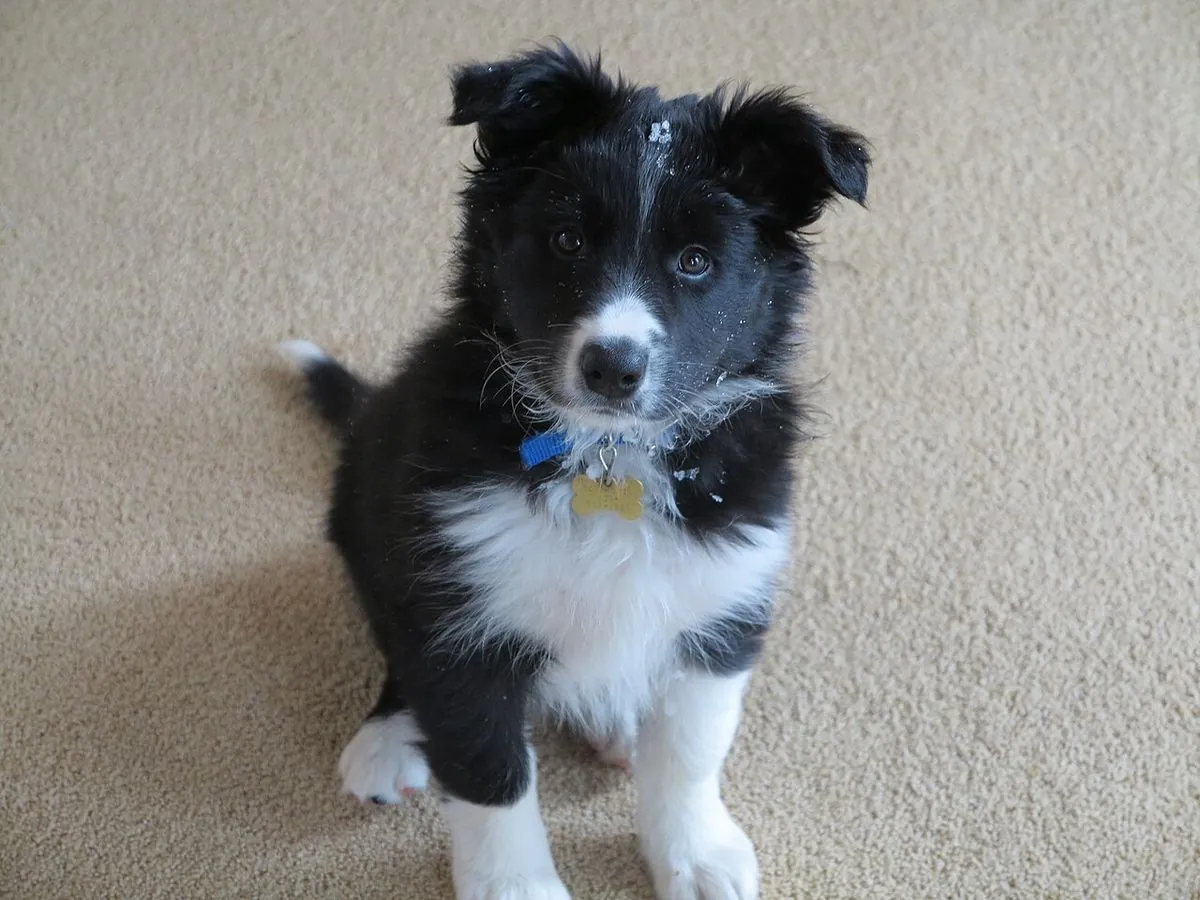
Border Collies are a medium breed. According to the Merck Veterinary Manual, growth slows after about 6 months, and small and medium breeds usually finish growing and reach skeletal maturity by 8 to 12 months.
Adult size varies a lot in this breed because working lines and show lines differ. Males commonly weigh 31 to 55 pounds and stand 19 to 22 inches tall. Females are usually 26 to 42 pounds and 18 to 21 inches. Your puppy’s parents are the best guide to where it will land.
| Age | What’s happening | Your focus |
|---|---|---|
| 8 weeks | Comes home, sleeps most of the day, tiny bladder | Crate setup, potty routine, gentle handling |
| 9 to 12 weeks | Peak socialization window, curious and bold | New people, sounds, surfaces, a puppy class |
| 3 to 4 months | Teething starts, nipping peaks, more energy | Chew toys, redirecting teeth, name and recall games |
| 4 to 6 months | Adult teeth come in, growth spurts, testing limits | Leash manners, short training sessions, impulse control |
| 6 to 9 months | Teenage phase, may “forget” cues, herding instincts get stronger | Keep training consistent, ask your vet about spay or neuter timing |
| 9 to 12 months | Close to adult height, still a puppy in the head | Build focus around distractions, slowly add exercise |
| 12 months and up | Height is done, body keeps filling out | Talk to your vet about adult food and harder activities |
Don’t panic if your pup is ahead of or behind a sibling. Weigh it at vet visits and ask whether it’s on a healthy curve. A lean puppy with a visible waist is what you want.
Finding a Responsible Breeder or Rescue

Before you bring a Border Collie puppy home, think hard about where it comes from. Good breeders and rescues both exist. So do puppy mills and backyard sellers who skip health testing.
A responsible breeder will happily show you health results for both parents. Ask for these:
- Hip certification from the Orthopedic Foundation for Animals (OFA) or a similar scheme, done after the parent turned 2
- An eye exam by a board-certified veterinary ophthalmologist, recorded with OFA
- CEA (Collie eye anomaly) DNA results
- TNS (trapped neutrophil syndrome), a fatal immune disorder in puppies
- NCL (neuronal ceroid lipofuscinosis), a fatal brain disease with a DNA test
- IGS (Imerslund-Gräsbeck syndrome), which blocks vitamin B12 absorption
- MDR1, a gene change that makes some herding dogs sensitive to drugs like ivermectin
Each of these DNA tests can find carriers, so a careful breeder can avoid producing affected puppies. If a seller says the parents “are healthy, so no tests needed,” walk away. You can read more about these conditions in our guide to common health problems in Border Collies.
A good breeder also raises puppies in the home, lets you meet the mother, asks you questions about your life, and takes the dog back at any age. Expect a waiting list.
Rescue is the other route. Breed rescues regularly take in young dogs and the occasional litter, and a rescue can tell you a lot about each dog’s temperament. Our list of Border Collie rescues by state is a good place to start.
How Much Are Border Collie Puppies?
Prices swing widely by region, bloodline and whether the parents are proven working dogs. Rescue adoption fees are usually much lower than breeder prices and often include vaccines, a microchip and spay or neuter. Be wary of a very cheap puppy from a breeder, since skipped health tests are usually where the savings come from.
Bringing Home a Border Collie Puppy: The First Week
Your puppy just left its mother and littermates, so the first week is about feeling safe. Keep the house quiet, limit visitors and stick to the same routine every day.
Get the basics ready before pickup day. Our list of essential items for a new Border Collie covers it in detail, and the short version is:
- A wire crate with a divider sized for an adult Border Collie
- A puppy playpen for safe time when you can’t watch closely
- The same food the breeder or rescue was feeding
- A collar with an ID tag, a light leash and a harness
- Chew toys and an enzyme cleaner for accidents
Puppies chew cords, swallow socks and squeeze into gaps. Go room by room with the dog-proofing checklist before the puppy arrives.
Book a vet visit within the first few days. If you haven’t picked a name yet, browse these Border Collie puppy names and choose one that is short and doesn’t sound like a cue such as “sit” or “no.”
Sleep, Crate Training and Potty Training
Young puppies sleep most of the day. A Border Collie puppy that never naps gets cranky and bitey, much like a tired toddler, so build quiet time into every day.
Crate Training Basics
Make the crate a good place. Feed meals in it, toss treats inside, and leave the door open at first. Keep it near you at night for the first few weeks so the puppy can hear and smell you.
Use the divider so the space is just big enough to stand, turn and lie down. A crate that’s too big gives the puppy room to use one end as a toilet. Move the divider back as it grows.
Never use the crate as punishment. The American Veterinary Society of Animal Behavior notes that puppies used to crates handle vet stays and travel with less stress.
Potty Training
Potty training is about timing. Take your puppy outside to the same spot:
- Right after it wakes up
- Within a few minutes of eating or drinking
- After play sessions
- Before bed and at least once in the night for the first weeks
- Every couple of hours in between while it’s awake
Praise and reward the moment it finishes. If you catch an accident, calmly carry the puppy outside. If you find one later, clean it with an enzyme cleaner and say nothing, because the puppy won’t connect a scolding with something it did ten minutes ago.
The Socialization Window: Why 8 to 12 Weeks Matters So Much
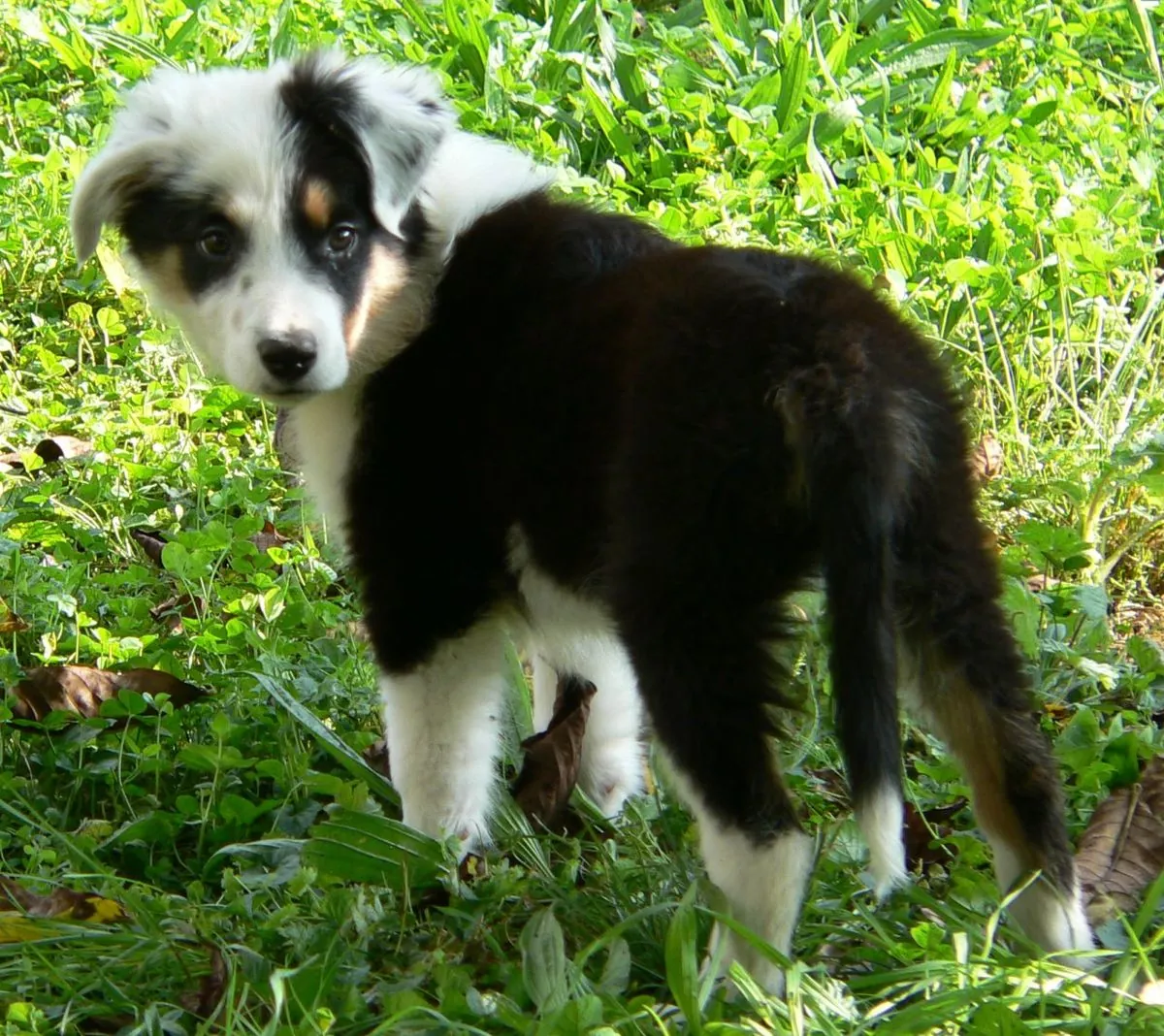
The most important time for puppy socialization is the first three months of life. That’s the position of the American Veterinary Society of Animal Behavior (AVSAB), which says this is the period when sociability outweighs fear.
AVSAB also states that behavior problems, not infectious disease, are the number one cause of death for dogs under three years old. For that reason it recommends socializing puppies before they finish their vaccines. Puppies can start a puppy class as early as 7 to 8 weeks, as long as they’ve had at least one set of vaccines 7 days before the first class and a first deworming.
Border Collies are sensitive dogs. Many are wary of strangers and quick to react to sudden noises, so this window matters even more for them. Aim for calm, positive exposure to:
- People of all ages, including people wearing hats, glasses and bulky coats
- Calm, vaccinated adult dogs
- Car rides, traffic sounds, the vacuum and the doorbell
- Different floors such as tile, grass, gravel and metal grates
- Being handled: paws, ears, mouth and gentle brushing
Watch your puppy’s body language. If it tucks its tail, freezes or tries to hide, back off and try again from farther away. More exposure isn’t better if the puppy is scared. Skip dog parks until vaccines are done, since dogs of unknown health pass through them.
Socialization doesn’t stop at 12 weeks. Keep showing your Border Collie new things all through the first year.
Nipping and Herding Behavior
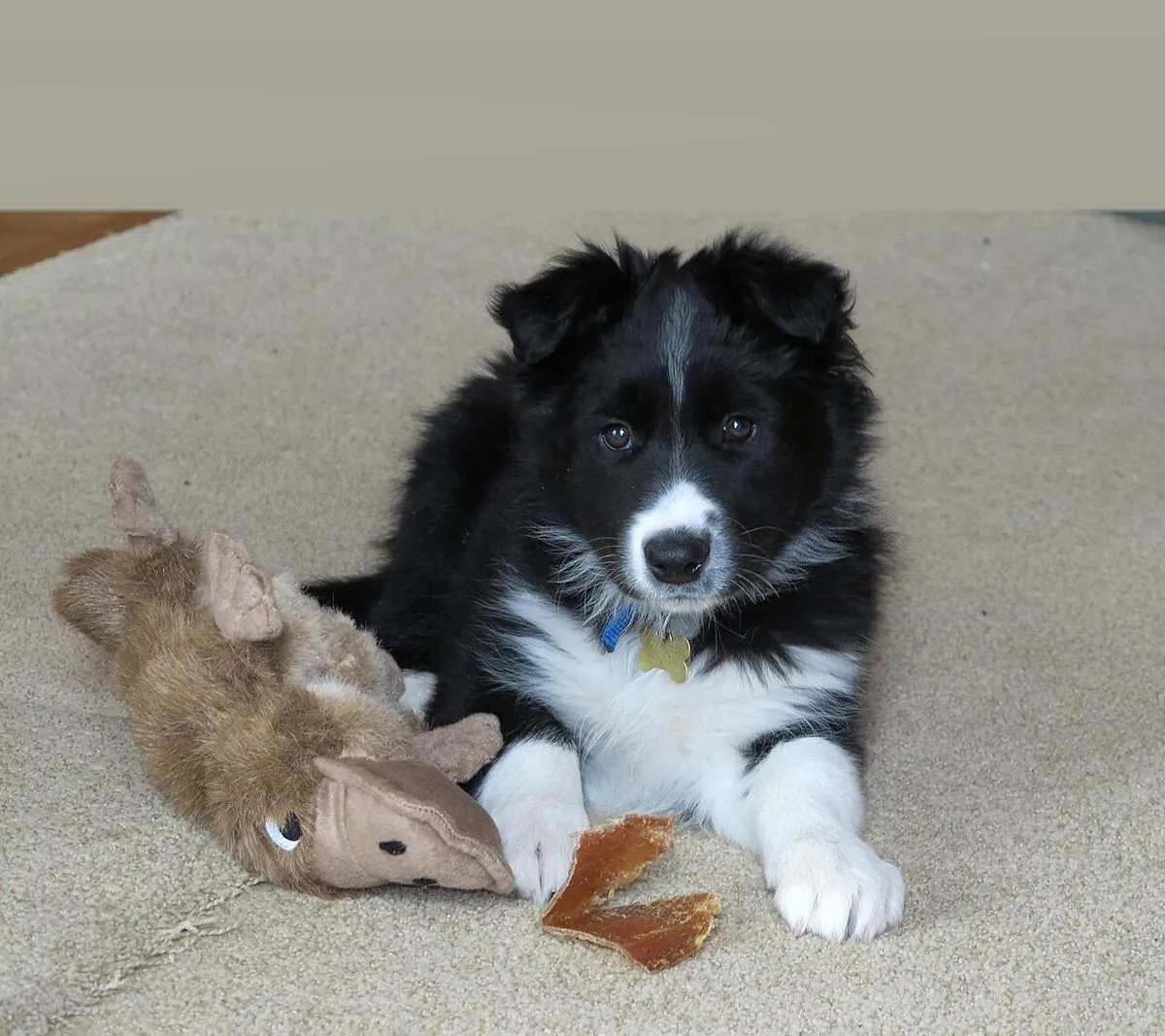
Every puppy mouths, but Border Collies add a twist. They were bred to gather and move sheep, and that instinct often shows up as nipping at heels, chasing feet and circling children. It’s normal, and you can shape it.
Here’s what works for most puppies:
- Keep a toy in your hand and offer it the moment teeth touch skin
- If the puppy keeps biting, stop playing and go still for a few seconds
- Teach a solid “sit” and reward it when the puppy starts to stalk or chase
- Don’t let kids run screaming while the puppy chases them
- Hand the puppy a chew when it gets wound up, then let it nap
Teething usually starts around 3 to 4 months and makes nipping worse. Frozen puppy teething toys help with sore gums. Our picks for the best toys for Border Collie puppies include chews that hold up to sharp teeth.
The herding drive can also show up as staring at and chasing cars, bikes or the cat. Redirect it early with fetch, tug and training games before it turns into a habit.
How Much Exercise Does a Border Collie Puppy Need?

A Border Collie puppy needs less hard exercise than most owners expect. Its growth plates are still open, and repeated high-impact activity can strain joints that are still forming.
For a young puppy, think short walks, free play on soft ground and sniffing. Avoid long runs, jogging beside a bike, repeated jumping and stairs until your vet says the skeleton is mature. A puppy that plays freely in a yard will stop and rest on its own. A puppy on a forced march won’t.
How long you should walk your Border Collie puppy depends on its age and how it handles it. The full breakdown by age is in our page on how much exercise a Border Collie needs. As a rule, if your puppy lies down, lags behind or gets more bitey on a walk, it’s done.
Mental Stimulation for a Calmer Puppy
Border Collies are famous for their brains, and a bored one finds its own work, usually in the couch. The good news is that a few minutes of real thinking can leave a puppy ready for a nap.
Easy ways to work your puppy’s brain:
- Feed meals from a puzzle feeder or a stuffed food toy
- Scatter kibble in the grass and let the puppy sniff it out
- Hide a toy and teach “find it”
- Teach a new trick every week: touch, spin, down, wait
- Play short games of tug with clear start and stop cues
Also teach your puppy to do nothing. AVSAB recommends scheduled time alone with a chew or food toy so puppies learn to amuse themselves. A Border Collie that can switch off is much easier to live with, especially in a small space like an apartment.
Feeding a Border Collie Puppy
Feed a complete and balanced puppy food that meets the AAFCO profile for growth or all life stages. Most Border Collies do well on a standard or medium-breed puppy formula.
The Merck Veterinary Manual gives a simple meal schedule:
- Weaning to 6 months: three meals a day
- 6 to 12 months: two meals a day
Keep feeding a growth diet until your puppy reaches skeletal maturity, not just until it looks done growing. Use the feeding chart on the bag as a starting point and adjust to keep a visible waist and ribs you can feel but not see. Treats count, so use part of the daily ration for training.
For brands, amounts and how to switch foods, see our full guide to feeding a Border Collie.
Vaccines and Vet Care in the First Year
Your puppy will see the vet several times before it turns 16 weeks. Under the 2022 AAHA canine vaccination guidelines, puppies get core combination shots for distemper, adenovirus and parvovirus every 2 to 4 weeks from 6 to 8 weeks old until they are older than 16 weeks. Rabies follows local law. AAHA now also lists leptospirosis as core, given as two doses starting around 12 weeks.
Your vet will also handle deworming, flea and tick prevention, heartworm prevention and a microchip if your puppy doesn’t have one. Tell every vet your dog is a Border Collie and share its MDR1 result, since that gene affects which drugs are safe.
Confirm the exact schedule with your vet, because it depends on where you live and your puppy’s risk. Our guide to Border Collie vet care covers choosing a vet and what each visit includes.
Training Your Border Collie Puppy
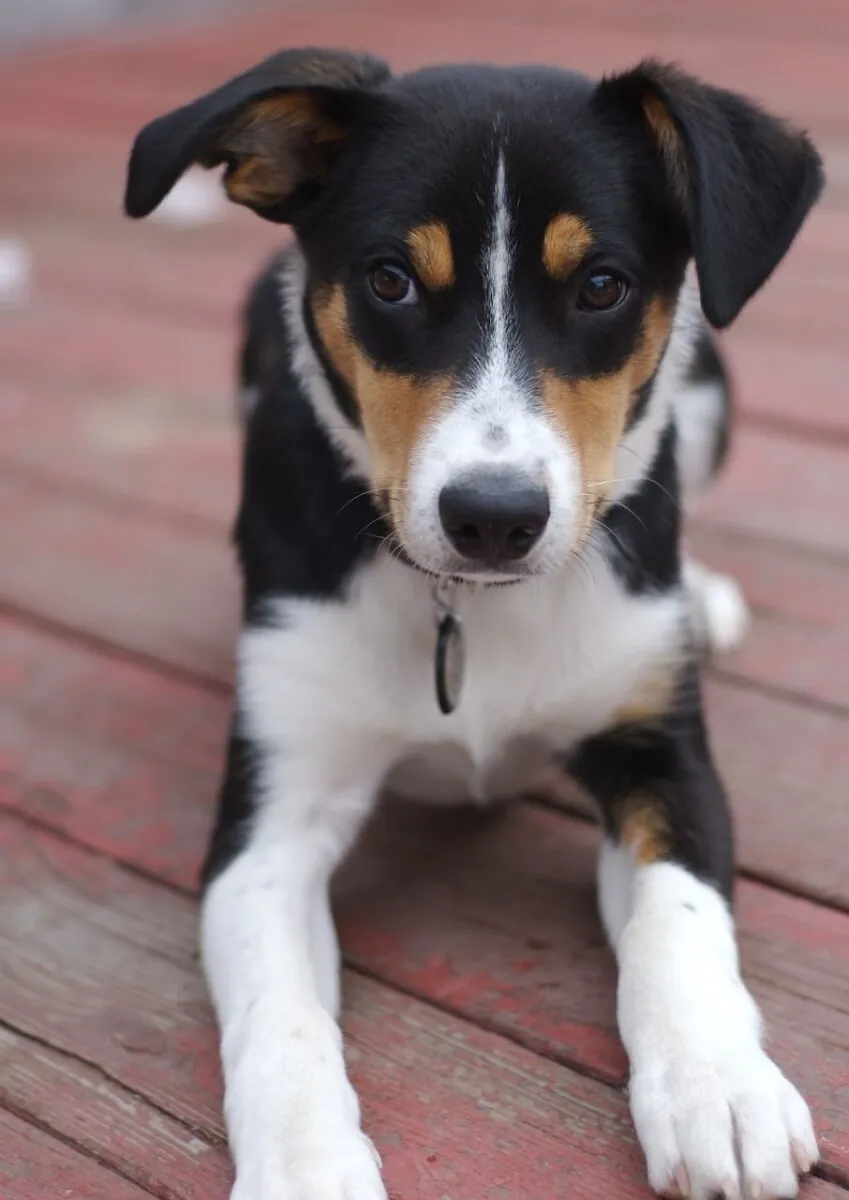
Start training the day your puppy comes home. Border Collies learn fast, which also means they pick up bad habits fast.
Keep sessions to a few minutes, several times a day. Use rewards: food, toys and praise. AVSAB notes that positive, consistent training is linked to fewer behavior problems than methods based on punishment.
Good first lessons are:
- Name recognition
- Sit and down
- Come when called, starting indoors
- Settle on a mat
- Walking on a loose leash
- Drop it and leave it
Around 6 to 9 months many puppies hit a teenage phase and seem to forget everything. Go back to easier steps, reward more, and stay patient. It passes. For a step-by-step plan, read our Border Collie training guide.
If this is your first dog, it’s worth reading about whether a Border Collie suits a first-time owner before you commit.
Border Collie Puppy FAQ
When do Border Collies stop growing?
Most Border Collies reach their full height between 8 and 12 months, the range the Merck Veterinary Manual gives for medium breeds. Many keep adding muscle and filling out through the chest after that. Your vet can check your puppy’s frame and tell you when growth is done.
How long should I walk my Border Collie puppy?
Keep walks short and easy while your Border Collie puppy is growing, and let it set the pace. Sniffing and free play on soft ground beat long leash walks. Stop when the puppy lags, lies down or gets nippy. Avoid jogging, stairs and repeated jumping until your vet confirms its growth plates have closed.
How often should a Border Collie puppy eat?
Feed a Border Collie puppy three meals a day from weaning to about 6 months, then two meals a day from 6 to 12 months. Use a complete and balanced puppy food. Start with the bag’s feeding chart and adjust so your puppy stays lean, with a visible waist and ribs you can easily feel.
When can my Border Collie puppy start puppy classes?
A Border Collie puppy can start puppy classes as early as 7 to 8 weeks old, according to AVSAB. The puppy should have at least one set of vaccines 7 days before the first class and a first deworming. Choose a class held indoors on surfaces that are easy to clean.
Why does my Border Collie puppy nip at my heels?
A Border Collie puppy nips at heels because of its herding instinct, which drives it to chase and control movement. It’s normal behavior, not aggression. Redirect it with a toy, stop moving when it nips, and reward calm behavior. Teething between 3 and 6 months often makes nipping worse for a while.
What should I ask a Border Collie breeder?
Ask a Border Collie breeder for health results on both parents. These should include OFA hip certification, an eye exam by a veterinary ophthalmologist, and DNA tests for CEA, TNS, NCL, IGS and MDR1. A good breeder also lets you meet the mother, asks about your home, and will take the dog back at any age.