The Border Collie and the Rough Collie are two separate breeds. The Rough Collie, the Lassie dog, is bigger, heavier and far more heavily coated, while the Border Collie is a smaller, leaner sheepdog bred for hard daily work that needs a lot more exercise.
They share a name and Scottish sheepdog roots, but they have been bred apart for well over a century. Here’s how they compare on size, coat, temperament, barking, shedding, health and exercise, plus where the Sheltie and the Bearded Collie fit in.
Border Collie vs Rough Collie at a Glance
Here is how the two breeds line up, using the American Kennel Club (AKC) and the UK’s Royal Kennel Club breed standards and the breed clubs’ own figures.
| Trait | Border Collie | Rough Collie |
|---|---|---|
| Height (AKC) | Males 19 to 22 in, females 18 to 21 in | Males 24 to 26 in, females 22 to 24 in |
| Height (UK standard) | Ideal 53 cm (21 in) for males, females slightly less | Males 56 to 61 cm (22 to 24 in), females 51 to 56 cm (20 to 22 in) |
| Weight | 30 to 55 lb (AKC) | Males 60 to 75 lb, females 50 to 65 lb (AKC) |
| Coat | Double coat, rough (medium length) or smooth | Long, dense double coat with a big mane and frill |
| Colors | Any color or pattern; white should not dominate | Sable and white, tricolor, blue merle (AKC also allows white) |
| Lifespan | Median 13.1 years in a 2024 UK study | Typically 12 to 14 years (Collie Club of America) |
| Daily exercise (Royal Kennel Club) | More than 2 hours | Up to 1 hour |
| Original job | Gathering and driving sheep on hill farms | Scottish sheepdog, now mostly a family and show dog |
Is a Collie the Same as a Border Collie?
No. When Americans say “Collie,” they usually mean the breed the AKC registers simply as the Collie, which comes in two varieties: Rough and Smooth. The AKC Collie standard judges both by the same rules. The only difference is the coat.
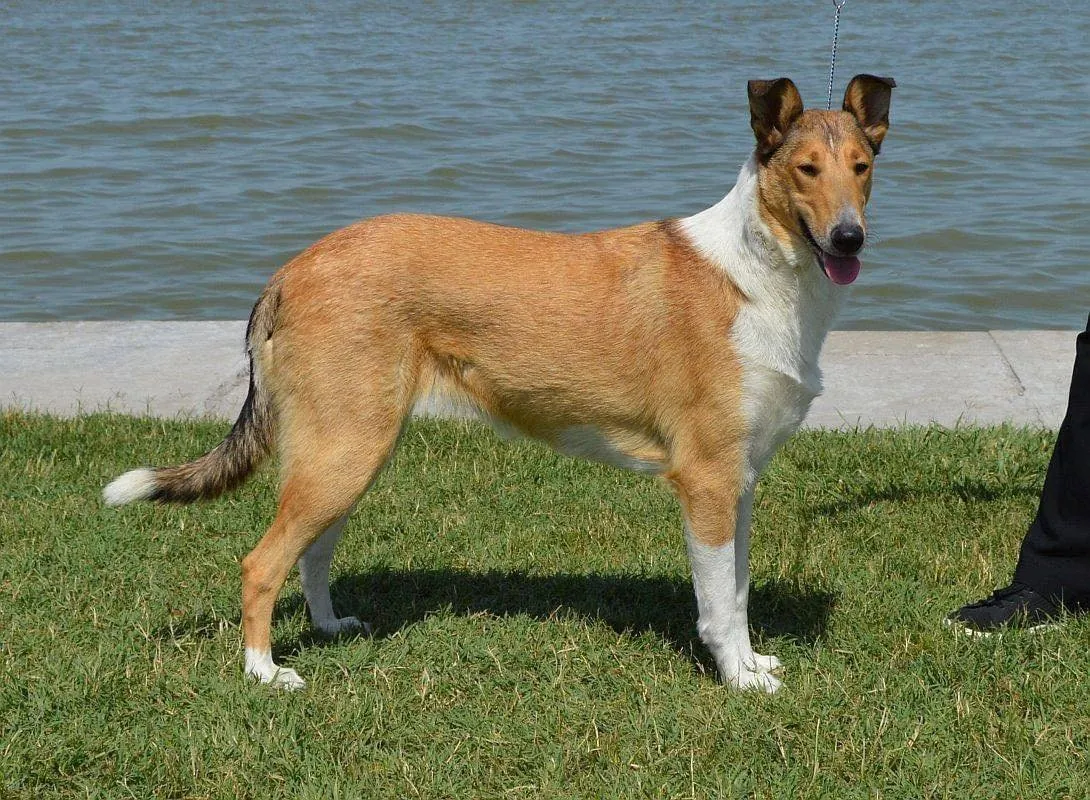
The UK’s Royal Kennel Club does it differently. It registers the Rough Collie and the Smooth Collie as two separate breeds, each with its own standard. Until 1994, the club says, Roughs and Smooths could be interbred, so both coat types could turn up in one litter.
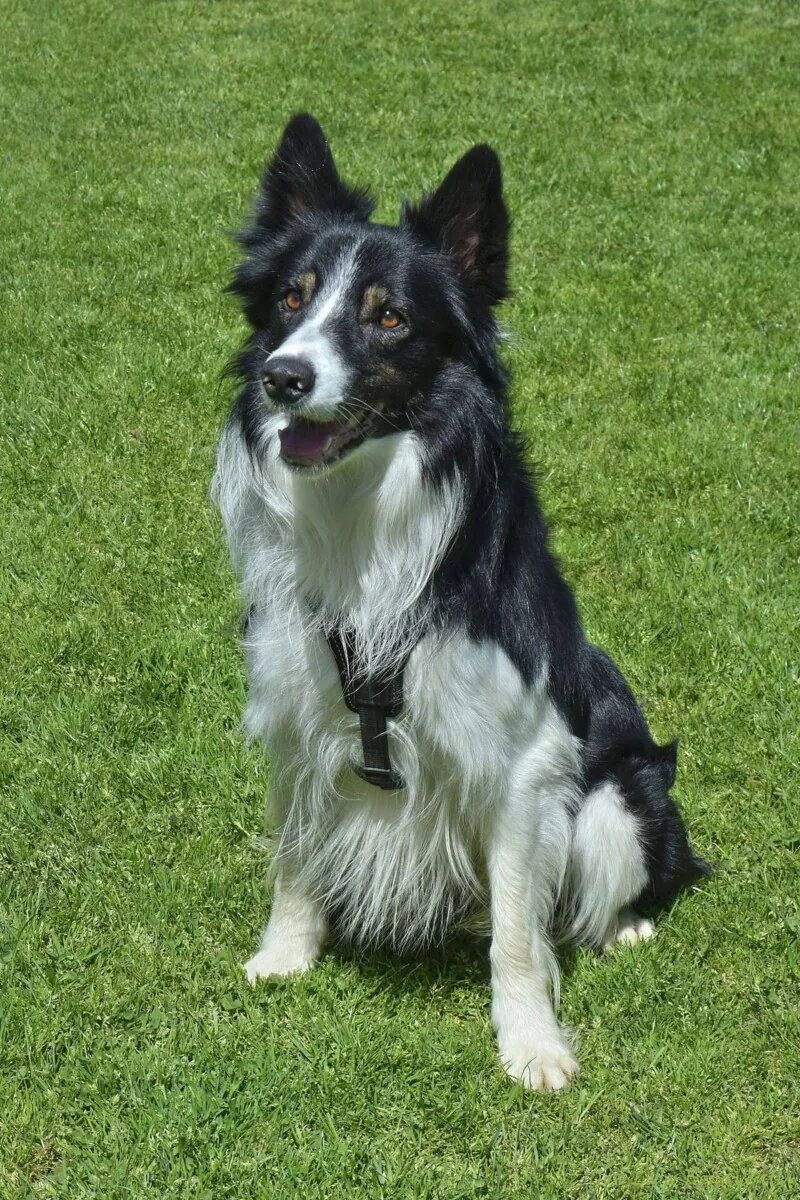
The Border Collie is a different breed again. Kennel Club collies went into the show ring from 1860 and were bred toward a set look. The working sheepdogs stayed on farms and were bred for herding. The name “Border Collie” was first used in 1915 by James Reid of the International Sheep Dog Society to tell its registered working dogs apart from the Kennel Club’s collies.
One more source of mix-ups: Border Collies also come in rough and smooth coats. A “rough-coated Border Collie” is still a Border Collie, just with longer hair. It is not a Rough Collie.
Was Lassie a Rough Collie?
Yes. The first dog to play Lassie on screen was Pal, a male Rough Collie born in 1940, who starred in Lassie Come Home in 1943. Pal started a line of descendants who went on to play the fictional female collie. The Collie Club of America credits Lassie, in part, for sable being the color most people link with the breed.
Where Did Each Breed Come From?
Both breeds go back to the working sheepdogs of Scotland and the hill country along its border with England. They split as different people bred them for different things.
The Royal Kennel Club traces the Rough Collie to Scottish working sheepdogs. The early dogs were smaller than today’s and mostly black and white, tricolor or black and tan. The first sable, a dog called Old Cockie, was born in 1868, and sable and white soon became the most popular color. Queen Victoria took collies from Balmoral to her other estates, which made the breed fashionable. The Royal Kennel Club suggests the “glamour” of the long coat is what drew people to the Rough over the Smooth for so many years.
The Border Collie took the other road. The AKC standard says it came from the Border country between Scotland and England, where shepherds bred for stock sense and the stamina to work long days on rough ground. Most modern Border Collies trace back to Old Hemp, born in Northumberland in 1893. Our Border Collie history guide covers Old Hemp and the early sheepdog trials in detail.
In the US, the Collie Club of America, the AKC parent club for both Collie varieties, was founded in 1886. The AKC recognized the Border Collie much later, in 1995.
How Much Bigger Is a Rough Collie Than a Border Collie?
A Rough Collie is noticeably bigger. Under AKC standards, a male Rough Collie stands 24 to 26 inches at the shoulder and weighs 60 to 75 pounds. A male Border Collie stands 19 to 22 inches. Compare the middle of each range and a male Rough Collie stands about 4 to 5 inches taller.
The AKC Border Collie standard gives no weight at all. It asks for dogs in “hard working condition” instead. The AKC’s breed profile puts adults at 30 to 55 pounds, and the American Border Collie Association, a working-dog registry, gives 25 to 55 pounds. You can see height and weight charts by age in our guide to Border Collie size.
UK Collies run smaller than American ones. The UK Rough Collie standard asks for males of 22 to 24 inches and gives no weight. The UK Smooth Collie standard lists 45 to 65 pounds for males and 40 to 55 for females, well under the AKC range.
Coat and Colors
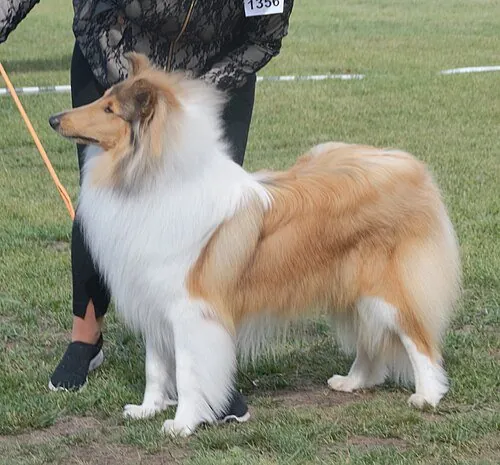
The coat is the first thing most people notice. The AKC calls the Rough Collie’s coat its “crowning glory.” It is abundant everywhere except the head and legs, with a harsh, straight outer coat and an undercoat so dense it’s hard to see the skin when you part the hair. The mane and frill are very full.
The Border Collie’s coat is lighter. The AKC standard allows a rough variety that “may vary in length without being excessive” and a smooth variety that is short all over. Both are close-fitting double coats.
Color rules are very different:
- Rough Collie (AKC): sable and white, tricolor, blue merle and white, with no preference among them.
- Rough Collie (UK): sable and white, tricolor and blue merle only. All white or mostly white is highly undesirable.
- Border Collie (AKC): any color or combination, all judged equally, as long as white doesn’t dominate.
So a red, lilac or brindle dog is almost certainly not a Rough Collie. Border Collies come in a far wider range, which our Border Collie colors guide walks through one by one.
Herding Style: Two Different Kinds of Sheepdog
The Border Collie is still the working sheepdog of choice. The AKC standard describes its style: wide sweeping outruns to gather the stock, then control through an intense stare called “eye,” paired with a stalking way of moving. Its greatest asset, the standard says, is working out of sight of the handler without commands.
The Rough Collie’s standard says much less about work. It describes a gait that suggests “effortless speed” and the herding heritage that lets the dog change direction almost instantly. In the UK, the Rough Collie is no longer used for serious herding, and the Border Collie has taken over that job. In the US and some European countries, though, Collies have made a comeback as working and performance dogs.
If you want a dog to actually move sheep, the Border Collie is the obvious pick.
Temperament: How Different Are They at Home?
Both breeds are smart and devoted, but they live at different speeds. The UK Rough Collie standard describes a “great companion dog, friendly, happy and active, good with children and other dogs.” The Collie Club of America calls Collies excellent with children and says Rough and Smooth Collies share the same temperament.
The AKC Border Collie standard sounds more like a job description: energetic, intelligent, keen, alert and responsive, an intense worker that is affectionate with friends but may be “sensibly reserved” with strangers. The American Border Collie Association adds that Border Collies are high-energy dogs, “intense and reactive to movement,” and only suit owners who can give them a lot of time, training and exercise.
Put simply, a Rough Collie tends to be a softer family dog. A Border Collie needs a job, even if that job is agility or training games. Our page on Border Collie temperament goes deeper into the Border Collie side.
Do Rough Collies Bark a Lot?
They can be. The Collie Club of America describes Collies as naturally alert and vocal, a trait it ties to their herding instincts, and says they often bark to signal something unusual. It also calls them excellent watchdogs that are easily trained to manage their barking.
Border Collies bark too. If that’s your worry, see how much Border Collies bark and how to stop it.
Do Rough Collies Shed? Grooming Compared
Yes, Rough Collies shed, and a lot. The Collie Club of America says a spayed or neutered Rough Collie sheds its coat starting in spring and keeps going until all of the coat has been stripped out. The club names spring and fall as the main shedding seasons.
For grooming, the Collie Club of America recommends weekly brushing for Rough Collies, paying attention to areas that mat: the tummy, armpits, “pants” and behind the ears. For an indoor Collie, the club suggests a bath and blow dry about every three months. The Royal Kennel Club is stricter and lists daily grooming for the Rough Collie.
Border Collies shed heavily too, and the AKC standard calls seasonal shedding normal. The Royal Kennel Club lists Border Collie grooming as “more than once a week.” Their shorter coat is less work than a Rough Collie’s but still leaves hair on everything. Our Border Collie shedding guide covers brushes and how to manage the coat blow.
Do Smooth Collies Shed Less?
Yes, but they still shed. The Collie Club of America says a Smooth Collie generally sheds less than a Rough because its shorter coat holds less loose undercoat. Smooths can shed seasonally or year round, and they need brushing about once a week. The Royal Kennel Club also lists Smooth Collie grooming as once a week.
Exercise Needs
This is the biggest practical difference. The Royal Kennel Club suggests more than 2 hours of exercise a day for a Border Collie and up to 1 hour a day for a Rough Collie.
The Collie Club of America describes Collies as needing moderate exercise, such as daily walks or playtime in a secure yard. It says the right Collie can live in an apartment if walked a few times a day. A Border Collie needs that and more, plus mental work. For hours, distances and puppy limits, see how much exercise a Border Collie needs.
Health Problems: What Each Breed Is Known For
Both breeds share some inherited problems, but how common they are differs a lot. The Royal Kennel Club recommends DNA tests for Collie eye anomaly and the MDR1 drug sensitivity gene in Rough Collies, Smooth Collies and Border Collies alike.
Collie Eye Anomaly (CEA)
Collie eye anomaly is an inherited eye disease that disturbs how the back of the eye develops. Its main sign is choroidal hypoplasia, a patch of underdeveloped tissue at the back of the eye. Some dogs also have colobomas (gaps in the eye’s structure) or, less often, retinal detachment. It is inherited as a recessive trait, and a 2007 study in Genome Research found that all affected dogs studied shared the same 7.8 kb deletion in the NHEJ1 gene, a mutation that arose in a common ancestor of the herding breeds.
CEA is far more common in Rough Collies. A Swiss study of more than 3,500 eye exams across six breeds from 1999 to 2007 found choroidal hypoplasia in 36.9% of Rough Collies, against 0.7% of Border Collies. Because the DNA test finds carriers as well as affected dogs, ask for results on both parents of any Collie or Border Collie puppy.
MDR1 Drug Sensitivity
The MDR1 mutation is the bigger worry for Collie owners. Dogs with it can’t pump certain drugs out of the brain properly. Washington State University’s pharmacology lab says about three of every four Collies in the US have the mutant gene. It puts the frequency at about 70% in Collies, compared with under 5% in Border Collies.
WSU lists drugs that cause problems in dogs with the mutation:
- Ivermectin at high doses, like those used for mange. Heartworm prevention doses are safe.
- Loperamide (Imodium), which WSU says should be avoided in all dogs with the mutation.
- Acepromazine and butorphanol, which need lower doses.
- Some chemotherapy drugs, which need lower doses to avoid severe toxicity.
- Apomorphine, used to make dogs vomit after eating something toxic.
If you own a Collie, ask your vet to test for MDR1 before any of these drugs are used. WSU’s test works from a cheek swab or a blood sample. The MDR1 rate in Australian Shepherds sits closer to the Collie’s than the Border Collie’s, which our Border Collie vs Australian Shepherd comparison covers.
Other Tests Each Breed Needs
For Rough Collies, the Royal Kennel Club also recommends eye exams, hip scoring, and DNA tests for degenerative myelopathy (DM) and progressive retinal atrophy (PRA-rcd2). For Border Collies, its list adds DNA tests for neuronal ceroid lipofuscinosis (CL), trapped neutrophil syndrome (TNS), Imerslund-Gräsbeck syndrome (IGS), sensory neuropathy, Raine syndrome and goniodysgenesis, along with elbow scoring and hearing tests. Our guide to Border Collie health problems explains each one.
Which Breed Lives Longer?
They’re close. The Collie Club of America says Collies typically live 12 to 14 years. For Border Collies, a 2024 study of more than 580,000 UK dogs put the median at 13.1 years. The Royal Kennel Club lists both the Rough Collie and the Border Collie as living “over 12 years.” Our Border Collie lifespan guide covers what Border Collies usually die from.
Border Collie or Rough Collie: Which Suits You?
Pick a Border Collie if:
- You can give it two hours or more of exercise and training every day.
- You want a partner for herding, agility, obedience or long hikes.
- You like a dog that is always thinking and always watching.
- You’d rather brush a shorter coat.
Pick a Rough Collie if:
- You want a gentle family dog that is good with children.
- Daily walks and play suit your routine better than hours of hard exercise.
- You don’t mind heavy grooming and a big spring shed.
- You’re ready to test for MDR1 and keep that result on file with your vet.
If you’re new to dogs, read our honest take on Border Collies for first-time owners before you decide.
Border Collie vs Sheltie: How Do They Compare?
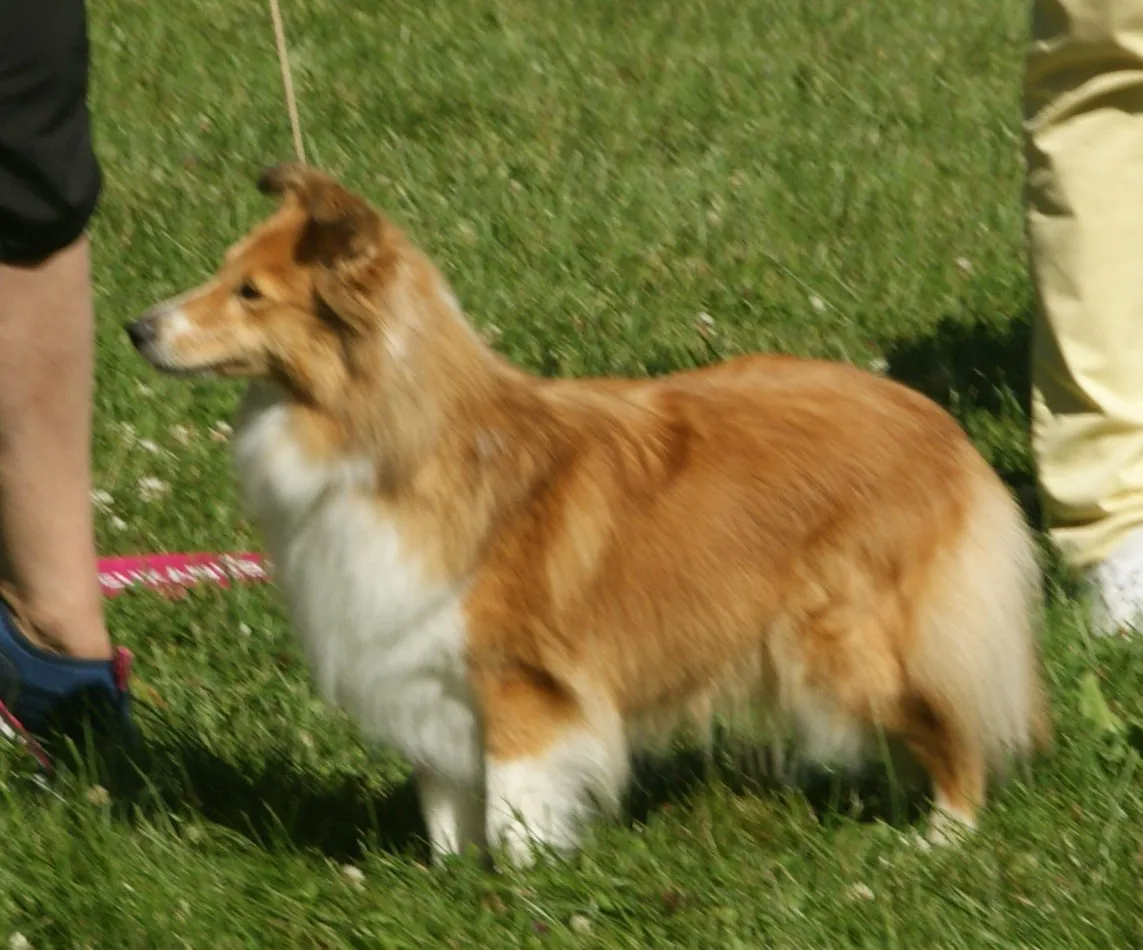
The Shetland Sheepdog, or Sheltie, looks like a small Rough Collie, and that’s no accident. The AKC Sheltie standard says that, like the Collie, it traces to the “Border Collie of Scotland,” which was taken to the Shetland Islands, bred down in size and later crossed with Collies. The Royal Kennel Club notes it was first shown at Crufts in 1906 as a “miniature Collie.”
| Trait | Border Collie | Shetland Sheepdog |
|---|---|---|
| Height (AKC) | Males 19 to 22 in, females 18 to 21 in | 13 to 16 in |
| Height (UK) | Ideal 53 cm (21 in) for males | 37 cm (14.5 in) males, 35.5 cm (14 in) females |
| Coat | Rough or smooth double coat | Long double coat with full mane and frill |
| Colors | Any color | Black, blue merle and sable, with white and/or tan |
| Exercise (Royal Kennel Club) | More than 2 hours a day | Up to 1 hour a day |
| MDR1 (WSU estimate) | Under 5% | About 15% |
The AKC describes the Sheltie as intensely loyal, affectionate and responsive to its owner, possibly reserved with strangers. Compared with a Border Collie, it’s much smaller, needs less exercise and needs more grooming.
What About the Bearded Collie?
The Bearded Collie is yet another separate breed. It’s a shaggy-coated herder with a beard of long hair on the chin and cheeks. The Royal Kennel Club says dogs like it have herded sheep and cattle in the Scottish Borders and Highlands for about 500 years, and the Kennel Club recognized the breed in 1959.
The AKC standard calls for males of 21 to 22 inches and females of 20 to 21 inches, so it’s close to Border Collie size. Puppies are born black, blue, brown or fawn, and the coat may lighten with age. The coat must never be trimmed for the show ring, and the Royal Kennel Club lists daily grooming, so expect plenty of brushing and shedding.
Border Collie vs Rough Collie FAQ
Do Rough Collies Shed a Lot?
Yes, especially in spring and fall. The Collie Club of America says a spayed or neutered Rough sheds its whole coat starting in spring, and recommends weekly brushing with extra sessions during shedding season.
Is a Rough Collie Bigger Than a Border Collie?
Yes. An AKC male Rough Collie stands 24 to 26 inches and weighs 60 to 75 pounds. A male Border Collie stands 19 to 22 inches, and the AKC puts adult Border Collies at 30 to 55 pounds.
Can a Border Collie Have a Rough Coat?
Yes. Border Collies come in a rough (medium length) coat and a smooth coat. A rough-coated Border Collie is still a Border Collie, not a Rough Collie.
Is the Smooth Collie a Different Breed?
It depends on the country. In the US, the AKC treats the Smooth Collie as one variety of the Collie, judged by the same standard as the Rough. In the UK, the Royal Kennel Club registers it as its own breed.
What Are Good Names for a Rough Collie?
Lassie and Pal are the classic picks, after the film collie and the dog who played her. For hundreds more ideas that work for any collie, see our list of Border Collie names.