
A full grown Border Collie stands about 18 to 22 inches at the shoulder and usually weighs 30 to 55 pounds. Males run a little taller and heavier than females. The American Kennel Club puts males at 19 to 22 inches and females at 18 to 21 inches.
That’s the official answer. Real dogs spread wider, because working Border Collies were never bred to a size. Below you’ll find the standards side by side, what thousands of pet Border Collies actually weigh, when puppies stop growing, how to tell if your dog is at a healthy weight, and what size crate to buy.
How Big Do Border Collies Get?
Border Collies are medium-sized dogs. Most adults land between 18 and 22 inches tall and 30 to 55 pounds (about 14 to 25 kg). They’re built a touch longer than they are tall, light on their feet and lean rather than bulky.
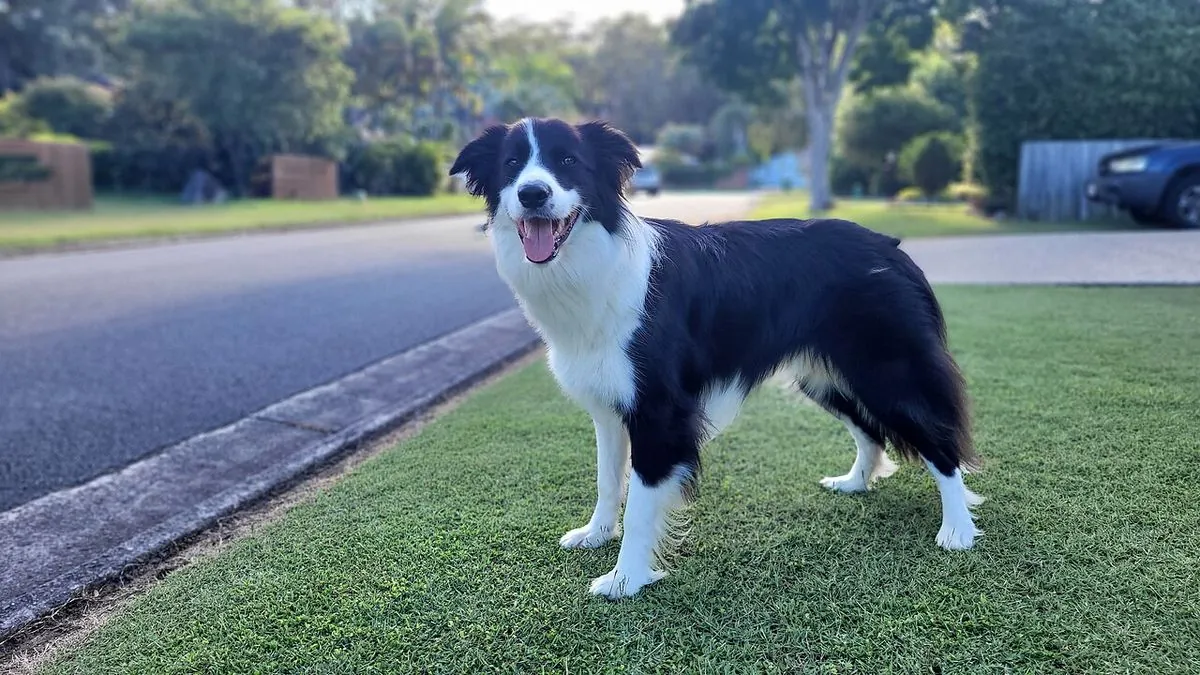
Height is measured at the withers, the top of the shoulder blades, not the top of the head. To check your own dog, stand them on a flat floor, lay a ruler or book level across the shoulders and measure straight down.
| Male Border Collie | Female Border Collie | |
|---|---|---|
| Height (AKC standard) | 19 to 22 in (48 to 56 cm) | 18 to 21 in (46 to 53 cm) |
| Height (Royal Kennel Club, UK) | Ideal 21 in (53 cm) | Slightly less than males |
| Weight (AKC breed weight chart) | 30 to 55 lb (14 to 25 kg) | 30 to 55 lb (14 to 25 kg) |
| Average adult weight of pet dogs (Australian vet records, age 3+) | About 52 to 54 lb (23.8 to 24.4 kg) | About 46 to 47 lb (20.7 to 21.1 kg) |
The last row comes from real dogs at the vet, which is a different thing from a show-ring ideal. More on that below.
What Is the Official Border Collie Size?
It depends on which club you ask, and some Border Collie registries don’t set a size at all.
AKC Breed Standard (United States)
The AKC Border Collie standard says height at the withers “varies from 19 to 22 inches for males, 18 to 21 inches for females.” The body should be slightly longer than tall, with a length to height ratio of about 10:9.
The standard gives no weight. It says balance between height, length, weight and bone “is more important than any absolute measurement,” and that “excess body weight is not to be mistaken for muscle or substance.” Dogs are meant to be shown in hard working condition. The 30 to 55 pound figure comes from the AKC’s separate breed weight chart.
Royal Kennel Club Standard (UK)
The UK standard is shorter. The Royal Kennel Club breed standard gives an ideal height of 53 cm (21 inches) for males, with females “slightly less.” Like the AKC, it lists no weight. It describes a body “slightly longer than height at shoulder” and says tendencies toward coarseness or weediness are undesirable.
So the AKC sets a range and the UK sets a single target. The Royal Kennel Club also adds a note for puppy buyers: the standard is a guide, and a dog might be larger or smaller than the measurements given.
Working Registries: No Size Standard
Working Border Collies are registered with sheepdog groups such as the International Sheep Dog Society (ISDS) in the UK and the American Border Collie Association (ABCA) in the US. These registries record dogs by working ability and pedigree. Neither sets a height or weight.
The ABCA goes further. Its registration rules say that breeding for conformation standards rather than working ability is detrimental to the breed’s health and working ability. A farm-bred Border Collie can be any size that does the job, which is a big reason the breed varies so much. If you’re curious how that split started, our Border Collie history covers the ISDS and Old Hemp.
How Much Does a Border Collie Weigh?
Adult pet Border Collies average about 46 to 54 pounds, going by a large Australian study of vet records. Males averaged around 52 to 54 pounds and females around 46 to 47 pounds. That’s toward the top of the AKC’s 30 to 55 pound range.
The numbers come from a 2026 study in the Australian Veterinary Journal by Hardefeldt and colleagues. They pulled body weights from VetCompass Australia clinic records for the ten most common breeds, including 3,730 Border Collies, and reported average weights by sex, neuter status and age.
| Group (age 3 or older) | Dogs | Average weight |
|---|---|---|
| Males, not neutered | 317 | 23.8 kg (about 52 lb) |
| Males, neutered | 1,127 | 24.4 kg (about 54 lb) |
| Females, not spayed | 184 | 20.7 kg (about 46 lb) |
| Females, spayed (age 4+) | 1,136 | 21.1 kg (about 47 lb) |
Keep two things in mind. These are averages, so plenty of healthy dogs sit well above or below them. And they’re everyday pets weighed at the vet, not dogs judged as ideal, so some of them carry extra pounds. The study found the average weights in clinic records were significantly higher than the AKC figure for every breed except Rottweilers. You can read the full VetCompass Australia weight study free online.
Male Border Collie Weight and Height
A male Border Collie stands 19 to 22 inches under the AKC standard, or about 21 inches under the UK ideal. Adult males in the Australian vet records averaged 23.8 to 24.4 kg, which is roughly 52 to 54 pounds. Neutered males were a little heavier on average than intact ones.
Female Border Collie Weight and Height
A female Border Collie stands 18 to 21 inches under the AKC standard and slightly under 21 inches under the UK standard. Adult females in the same records averaged 20.7 to 21.1 kg, about 46 to 47 pounds. That’s roughly 6 to 7 pounds lighter than the average male.
Why Do Border Collies Vary So Much in Size?
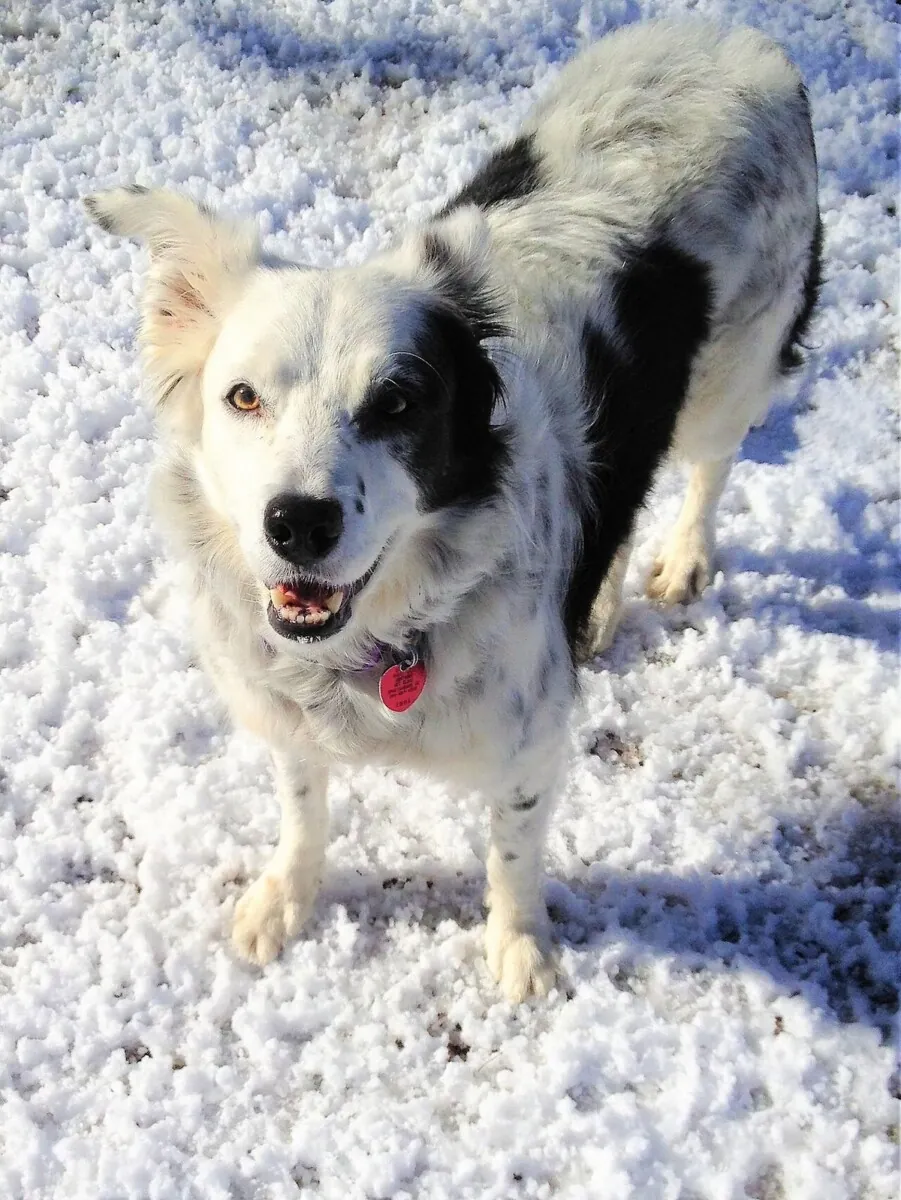
Two Border Collies can look like different breeds. A lean 32-pound farm dog and a solid 55-pound dog both fall inside the AKC weight range. Three things drive most of the gap.
- Working and show lines differ. The UC Davis Veterinary Genetics Laboratory breed overview says show-bred Border Collies tend to have thicker coats, wider skulls and heavier bone, while working lines tend to have thinner, shorter coats and to be smaller. Show dogs also look more alike, since they’re bred to one written standard.
- Males are taller and heavier on average, as both the standard and the vet data show.
- Because working registries select for herding and not looks, size within the breed is broad. Your puppy’s parents are the best clue to where it will end up.
Weight also drifts with lifestyle. A dog that runs sheep all day and a dog that naps on the couch can share the same frame and still weigh quite differently.
Are There Big Border Collies?
Yes. The standards describe an ideal, not a limit on real dogs, and the Royal Kennel Club says a dog might be larger than the measurements given. A taller dog will naturally carry more weight, and show lines, which tend to have heavier bone, often sit toward the top of the range.
Being over the standard doesn’t mean a dog isn’t purebred. Working registries set no size at all, and even the AKC standard calls overall balance more important than any absolute measurement. Before you assume a big dog is just big-boned, though, check its body condition. A 60-pound Border Collie with no waist is usually carrying fat, not muscle.
Is There a Small or Miniature Border Collie?
There is no official miniature Border Collie. Neither the AKC nor the Royal Kennel Club standard has a miniature or toy variety. Both describe one medium-sized dog.
Small Border Collies do exist. A purebred dog from small working parents can sit at the very bottom of the range, around 30 pounds, and that’s still a Border Collie. But a puppy sold as a “mini Border Collie” is usually one of these:
- A naturally small Border Collie from small parents
- A mix with a smaller breed
- A different breed that looks similar
Two lookalikes come up a lot. The Shetland Sheepdog stands 13 to 16 inches under the AKC standard. The Miniature American Shepherd is a scaled-down cousin of the Australian Shepherd and is its own breed, recognized by the AKC in 2015. If a breeder promises a Border Collie that stays tiny, ask to see both parents and their registration papers.
When Do Border Collies Stop Growing?
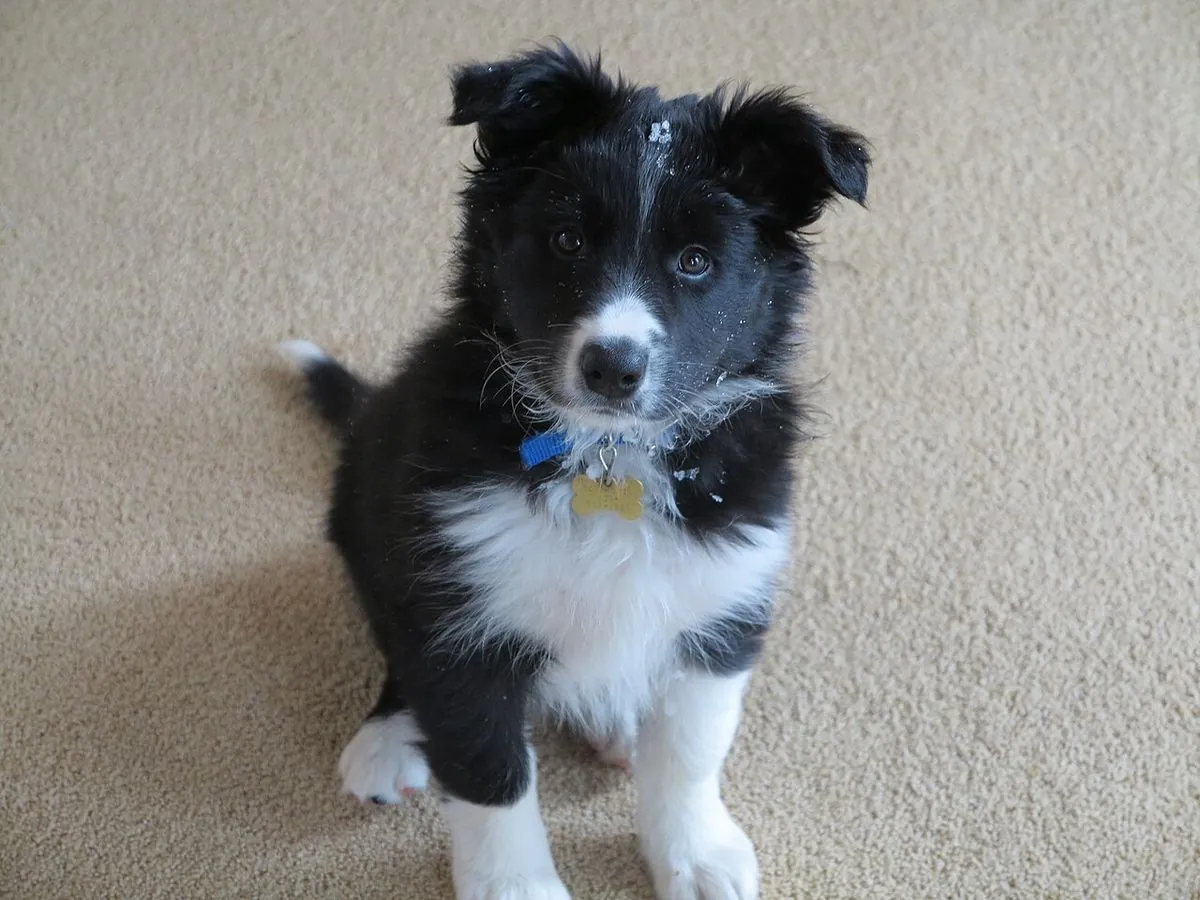
Most Border Collies reach their full height at around 8 to 12 months old. The Merck Veterinary Manual says puppies grow fast for the first 5 months, growth starts to level off after 6 months, and small and medium breeds may finish growing and reach skeletal maturity by 8 to 12 months.
Weight keeps creeping up after that. In the Australian vet records, the average neutered male went from 21.7 kg at age 1 to 23.2 kg at 2 and 24.4 kg at 3 and older. Spayed females went from 17.8 kg at 1 to 21.1 kg by 4. Part of that is a dog filling out through the chest and muscle, and part is likely the extra pounds many pets gain once puppy energy settles.
Your vet is the best judge of when growth is done. For what to expect month by month, from teething to adolescence, see our Border Collie puppy guide.
Border Collie Growth Chart: Weight by Age
We couldn’t find a published, vet-backed weight-by-age chart for Border Collie puppies. The best-known puppy growth study, by Salt and colleagues at Waltham in 2017, built its growth charts from US vet clinic weigh-ins and groups dogs by expected adult size, not breed. The week-by-week Border Collie charts online come from pet websites and calculators, and they don’t agree with each other.
Here’s what the solid data does tell you.
| Age | What’s happening | Source |
|---|---|---|
| Birth to 5 months | Fastest growth | Merck Veterinary Manual |
| 6 months | Growth starts to level off | Merck Veterinary Manual |
| 8 to 12 months | Height and skeleton may be done in medium breeds | Merck Veterinary Manual |
| 1 year | Average 17.2 to 17.8 kg (38 to 39 lb) for females, 20.9 to 21.7 kg (46 to 48 lb) for males | VetCompass Australia |
| 2 years | Average 18.2 to 19.4 kg (40 to 43 lb) for females, 20.9 to 23.2 kg (46 to 51 lb) for males | VetCompass Australia |
| 3 years and up | Average 20.7 to 21.1 kg (46 to 47 lb) for females, 23.8 to 24.4 kg (52 to 54 lb) for males | VetCompass Australia |
Merck also notes that once a puppy reaches about 90% of its expected adult weight, it’s time to move toward a less energy-dense food. A puppy’s weight at any given week tells you less than its body shape does. Check the waist and ribs, described below, and weigh your puppy at each vet visit so you can see the trend.
What Is a Healthy Weight for a Border Collie?
A healthy Border Collie weight is whatever your dog weighs when it scores 4 or 5 out of 9 on a body condition chart. The number on the scale matters less than how your dog looks and feels, because a 20-inch female and a 22-inch male have very different ideal weights.
Vets use the WSAVA body condition score chart. On its 9-point scale, 4 and 5 are ideal, 1 to 3 are too thin and 6 to 9 are over ideal. Here’s how to check at home:
- Feel the ribs. At an ideal weight you can feel them without pressing through a layer of fat. With a fluffy coat, use your hands, not your eyes.
- Look from above. You should see a waist behind the ribs.
- Look from the side. The belly should tuck up toward the back legs.
At a score of 6, the ribs have a slight extra fat covering and the waist is visible but not prominent. Past that, the waist fades and fat builds over the lower back and tail base. If you’re unsure, ask your vet to score your dog at the next visit and tell you its target weight.
Staying lean matters for this breed. Extra weight is linked to a shorter life in dogs, which we cover in our Border Collie lifespan guide. To adjust portions, use the calorie chart in our guide to how much to feed a Border Collie, and match it with enough daily activity using our Border Collie exercise chart by age.
Border Collie vs Australian Shepherd and Rough Collie Size
Border Collies are a little smaller than Australian Shepherds and clearly smaller than Rough and Smooth Collies. Here are the AKC numbers side by side.
| Breed | Male height | Female height | Weight |
|---|---|---|---|
| Border Collie | 19 to 22 in | 18 to 21 in | 30 to 55 lb |
| Australian Shepherd | 20 to 23 in | 18 to 21 in | 40 to 65 lb |
| Collie (Rough and Smooth) | 24 to 26 in | 22 to 24 in | Males 60 to 75 lb, females 50 to 65 lb |
Heights for all three breeds come from the AKC Herding Group standards. The Australian Shepherd weight is from the AKC, which says females tend toward the lower end and males the higher end. The Collie weights are written into its standard.
So the Aussie is the closest match. It overlaps the Border Collie in height but runs heavier. If you’re choosing between the two, our Border Collie vs Australian Shepherd comparison covers energy, coat and temperament too. The Collie is a size up from both, with males standing 24 to 26 inches.
What Size Crate Does a Border Collie Need?
Many crate size charts put Border Collies in a 36-inch crate, and some put them in a 42-inch one. Measure your own dog rather than going by breed, because the size range is wide.
- Length: with your dog standing, measure from the tip of the nose to the base of the tail. Add 2 to 4 inches.
- Height: with your dog sitting, measure from the floor to the top of the head. Add 2 to 4 inches.
- Pick the smallest crate that meets both numbers.
Those measuring steps come from dog trainer Cathy Madson’s crate guide at Preventive Vet. The Humane World for Animals crate training guide adds that the crate should be big enough for your dog to stand up and turn around in, and that a growing puppy should get a crate sized for its adult size. A wire crate with a divider panel lets you start small and open it up as your puppy grows.
For specific crate, harness and leash picks, see our Border Collie supplies list. A crate pad or bed should match the crate’s floor; our Border Collie dog bed size guide has measurements for that.
Border Collie Neck Size and Collar Fit
We couldn’t find a reliable published neck measurement for the breed, and with this much size variation one number wouldn’t help much anyway. Measure your own dog.
Wrap a soft tape measure around the neck where the collar will sit. A flat collar should fit snugly, with room to slide two fingers underneath. Recheck a puppy’s collar every few weeks while it’s growing, and check an adult’s after any weight change. Border Collies with thick ruffs can hide a too-tight collar, so part the fur when you check.
Harnesses are sized by chest, not neck. Measure around the widest part of the rib cage, just behind the front legs, and use the brand’s chart.
Border Collie Size FAQ
Is a Border Collie a medium or large dog?
A Border Collie is a medium dog. Adults usually weigh 30 to 55 pounds and stand 18 to 22 inches at the shoulder. Pet food rules from AAFCO, quoted in the Merck Veterinary Manual, only treat dogs expected to reach 32 kg (about 70 pounds) or more as large size dogs, and very few Border Collies get anywhere near that.
How big do Border Collie mixes get?
It depends on the other breed, and there’s no reliable size chart for any Border Collie mix. A Border Collie crossed with a Lab or a German Shepherd will often end up bigger than a purebred Border Collie, while a cross with a smaller breed may stay under 30 pounds. If you know both parents, their sizes are your best guide.
How much should a 6-month-old Border Collie weigh?
There’s no vet-backed Border Collie figure for 6 months, and online charts disagree. What’s known is that growth slows after 6 months, and most of the height comes before 12 months. Judge your puppy by its waist and ribs, and ask your vet if it seems too thin or too round.
Is my Border Collie big enough for apartment life?
Size is rarely the problem. A 40-pound Border Collie takes up little floor space. Its exercise and work needs are the real challenge in a small home, which we cover in Border Collies in apartments.
Can a Border Collie weigh 60 pounds?
Some do, though 60 pounds is above both the AKC range (30 to 55) and the ABCA range (25 to 55). A tall, heavy-boned dog may carry that weight and still be fit, but the scale alone won’t tell you which kind of 60 pounds you have. Check for a visible waist and ribs you can feel easily. If you can’t find them, ask your vet for a target weight.