
This is Part 3 of our series on adopting a Border Collie.
How much exercise does a Border Collie need? A healthy adult Border Collie needs about 1.5 to 2 hours of activity a day, and many working-bred dogs want more. That time should mix real physical exercise (brisk walks, running, fetch, hiking) with mental work like training and puzzle games.
Puppies need far less hard exercise than adults, and seniors usually need gentler sessions. Below you’ll find daily numbers by age, how many miles to walk, how far a Border Collie can run, and the exercise ideas that actually tire this breed out.
How Much Exercise Does a Border Collie Need Each Day?
Most adult Border Collies do well with 1.5 to 2 hours of combined physical and mental exercise every day, split into two or more sessions. The UK’s Royal Kennel Club lists the breed’s exercise needs as “more than 2 hours per day,” which is a fair target for young, high-drive dogs.
Treat those numbers as a starting point. Every Border Collie is different, and age, health, breeding and routine all change the answer.
| Life stage | Daily exercise | What it looks like |
|---|---|---|
| Puppy (8 weeks to 6 months) | Several short play sessions | Free play on soft ground, short outings, 5-minute training games |
| Adolescent (6 to 12 months) | About 1 hour, building up | Longer walks at the puppy’s pace, easy hikes, lots of training |
| Young adult (1 to 3 years) | 2 hours or more | Brisk walks, running, fetch, sports, daily brain work |
| Adult (3 to 8 years) | 1.5 to 2 hours | Two good walks plus play and training |
| Senior (around 9 years and up) | Less, at a gentler pace | Shorter, more frequent walks, swimming, scent games |
Mental exercise counts toward the total. Ten or fifteen minutes of focused training can tire a Border Collie as much as a long walk, so don’t think of it as an extra.
You Create the Dog You Exercise
A member of the BC Boards forum at bordercollie.org put it well: “You create the dog that you have in terms of exercise. If you introduce it to 5 hours of exercise a day then you have created a dog that needs 5 hours of exercise a day.”
Fitness builds on itself. The more running you do, the more stamina your dog has, and the more running it takes to tire it out. That’s why a balanced routine with plenty of brain work and a real “off switch” at home beats hours of ball chasing.
If your Border Collie is used to five hours a day and you suddenly cut back to two, expect restlessness and behavior problems. Change the routine slowly.
Why Do Border Collies Need So Much Exercise?
Border Collies need a lot of exercise because they were bred to work sheep all day. The breed comes from the region along the border between Scotland and England, where farmers selected dogs for stamina, focus and brains, not for lying around.
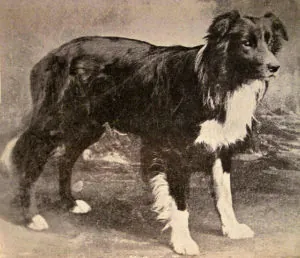
Much of the modern breed traces back to a sheepdog called Old Hemp, born in Northumberland in 1893. He worked quietly and intensely, and that style was bred into the dogs that followed. You can read more in our Border Collie history.
Your Border Collie doesn’t need sheep to be happy. But that herding drive doesn’t switch off in a suburban home. A bored Border Collie will find its own job, and you probably won’t like it: chewing, digging, nonstop barking, or herding the kids and the cat.
How Many Miles Should a Border Collie Walk a Day?
Most healthy adult Border Collies are comfortable walking 3 to 6 miles a day, split over two or more walks. That’s roughly what 1 to 2 hours of brisk walking adds up to at a normal human pace of about 3 miles per hour. Fit, conditioned dogs can cover much more on hikes.
Miles on a leash aren’t the whole story, though. A Border Collie walking at your pace is barely warming up. Mix in off-leash running in a safe area, fetch or a jog, and you’ll get a tired dog in fewer miles.
Build distance up over a few weeks if your dog isn’t used to it, and check paw pads after long walks on pavement or rough trails.
How Long Should You Walk a Border Collie?
Walk an adult Border Collie for at least 30 to 60 minutes per walk, with a total of 1 to 2 hours of walking or other activity across the day. A quick lap around the block is a potty break, not exercise. If your dog isn’t a little tired at the end, the walk was probably too short or too slow.
Walking is good for you too. A long walk clears your head, and it’s the easiest habit to keep up every day.
How Many Walks Does a Border Collie Need?
Most Border Collies do best with two walks a day, morning and evening, plus play or training in between. One long walk can work on busy days if you add a fetch session or a training game later. Spreading activity out keeps your dog calmer than one big burst.
Make Walks Work Their Brain
Let your dog sniff. Sniffing is mental work, and a slow “sniffari” can settle a busy Border Collie surprisingly well. Practice cues on the go too: sit at curbs, a short stay, a recall on a long line, or walking on the left and then the right.
How Far Can a Border Collie Run?
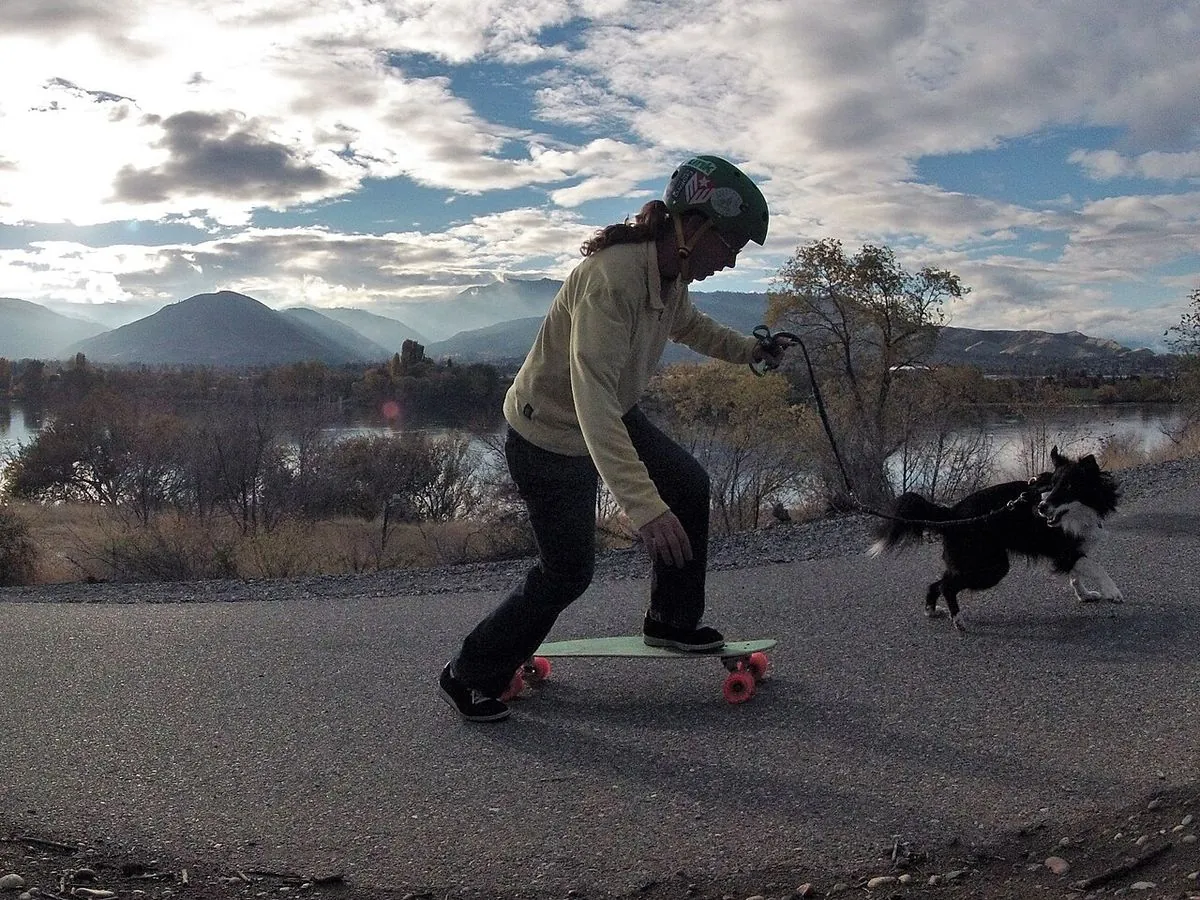
A fit, fully grown Border Collie can run several miles with you once it’s been built up to it gradually. Border Collies are fast and have great stamina, which is why they shine in agility, flyball and disc sports. How far yours can run depends on age, fitness, weather and the surface.
A few rules keep running safe:
- Wait until your vet says your dog’s growth plates have closed before regular jogging or running beside a bike. In medium-sized dogs this is usually somewhere around 12 to 18 months.
- Start with short runs and add distance slowly over weeks, just like a human runner would.
- Run in the cool part of the day. Border Collies will keep going in the heat long after they should stop.
- Carry water and take breaks, even if your dog acts like it doesn’t need them.
How Long Can a Border Collie Run Without Stopping?
A conditioned Border Collie can run for a long time without stopping, which is exactly the problem. This breed rarely quits on its own, so you have to decide when the session ends.
Some Border Collies also carry a condition called Border Collie Collapse. According to the University of Minnesota Canine Genetics Lab, episodes are triggered by strenuous exercise like repeated ball retrieving, usually start 5 to 15 minutes into the activity, and cause wobbling, disorientation or a choppy gait. If you ever see this, stop right away, cool your dog down and call your vet. Our page on common health problems in Border Collies covers it in more detail.
Border Collie Puppy Exercise by Age

A Border Collie puppy needs short, gentle bursts of activity, not long walks or runs. Its bones and joints are still growing, and repeated high-impact exercise can strain them. Free play on soft ground, where the puppy can stop and rest whenever it wants, is the best exercise for a young pup.
Research backs this up. A Norwegian study of 501 puppies from four large breeds found that off-leash exercise in park-like terrain before 3 months of age was linked to a lower risk of hip dysplasia, while walking on stairs at that age was linked to a higher risk. Border Collies are smaller than those breeds, but the lesson carries over: free play is good, stairs and forced exercise are not.
| Age | Good exercise | Avoid |
|---|---|---|
| 8 to 12 weeks | Free play in the house and yard, short trips to meet new people and places, tiny training games | Stairs, long leash walks, rough play with big dogs |
| 3 to 6 months | Short leash walks that slowly get longer, off-leash play on grass, puppy class | Jogging, repeated jumping, forced marches |
| 6 to 12 months | Longer walks and easy hikes at the puppy’s pace, flatwork for dog sports, fetch on soft ground | Long runs, biking, full-height agility jumps |
| 12 to 18 months | Gradually add running and harder sports once your vet gives the go-ahead | Going from zero to marathon overnight |
Watch the puppy, not the clock. If it lags behind, lies down or gets extra bitey, it’s done. Our Border Collie puppy guide covers socialization, training and the rest of that first year.
Exercise for Adult and Senior Border Collies
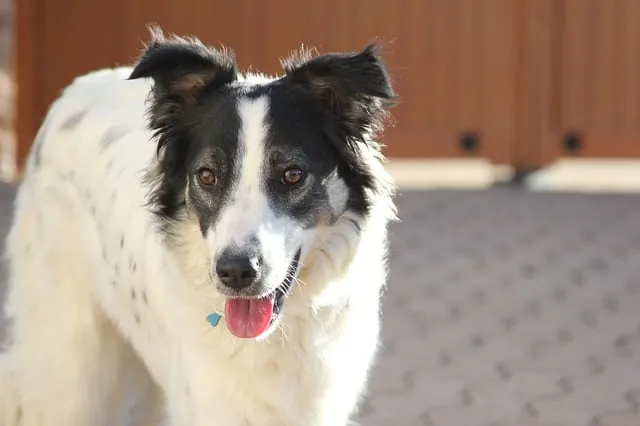
Once your Border Collie is fully grown, it can handle the full menu: running, hiking, swimming, agility and long games of fetch. This is the stage where most dogs need the full 1.5 to 2 hours or more.
Don’t adopt a Border Collie and plan to keep it inside all day. That’s asking for trouble. The herding instinct will come out somewhere, and it usually comes out as problem behavior.
Older Border Collies still need daily exercise, just gentler. A 10-year-old usually does better with two or three shorter walks than one long one, and swimming is easy on stiff joints. Keep up the brain games, since mental work stays easy on the body. If your senior slows down, limps or stiffens up after walks, ask your vet about arthritis and pain relief. Our page on Border Collie lifespan has more on caring for an aging dog.
Physical Exercise Ideas for Border Collies
Walking is the base, but Border Collies love variety. These are the activities that work best for the breed.
Long Walks
A long walk is the easiest daily exercise for you and your dog. Start with 30 minutes and build from there. Vary the route so your dog gets new smells, which keeps the walk interesting for both of you.
Running
Running tires a Border Collie much faster than walking. A 15-minute run can do as much as a 30-minute walk, so it’s a handy option on busy days.
I have never been a runner. I’ve tried many times and it just doesn’t stick for me, which is where the next option comes in.
Biking
Biking gives your dog a running workout while you ride. Biking works a lot better for me than running ever did.
Holding a leash and handlebars at the same time is tricky, though. A bike attachment that holds the leash away from the wheel makes it much safer. Go slow at first and stick to quiet paths until your dog learns to stay beside you.
Hiking

Hiking is harder than walking, thanks to hills and uneven ground, and Border Collies love trails. It’s also a good way for both of you to get out of the city for a while. Bring water and check your dog for ticks and burrs afterward.
Fetch
Fetch is the simplest way to burn energy if you have open space or a dog park nearby. Grab a favorite ball and throw it.
My Border Collie loved fetch. He would have chased a ball for hours if I’d let him. That’s the catch: many Border Collies get obsessive about balls, so set a limit, mix in short breaks and end the game while your dog still wants more. Our list of the best toys for Border Collies includes tough balls and launchers.
Frisbee
Border Collies are great at reading where a disc will land, which makes frisbee a perfect game for the breed. Start with low, short rolls and throws, then work up to catches in the air once your dog is fully grown. Disc dog is even a competitive sport.
Tug of War
Tug is a quick, intense game that burns energy in a small space. Use a rope toy with handles so your hands stay away from teeth.
Some dogs growl while they tug. In play, that’s usually just excitement. Tug won’t make a dog aggressive, and many trainers use it as a reward. Teach a “drop it” cue so you can end the game on your terms.
Swimming
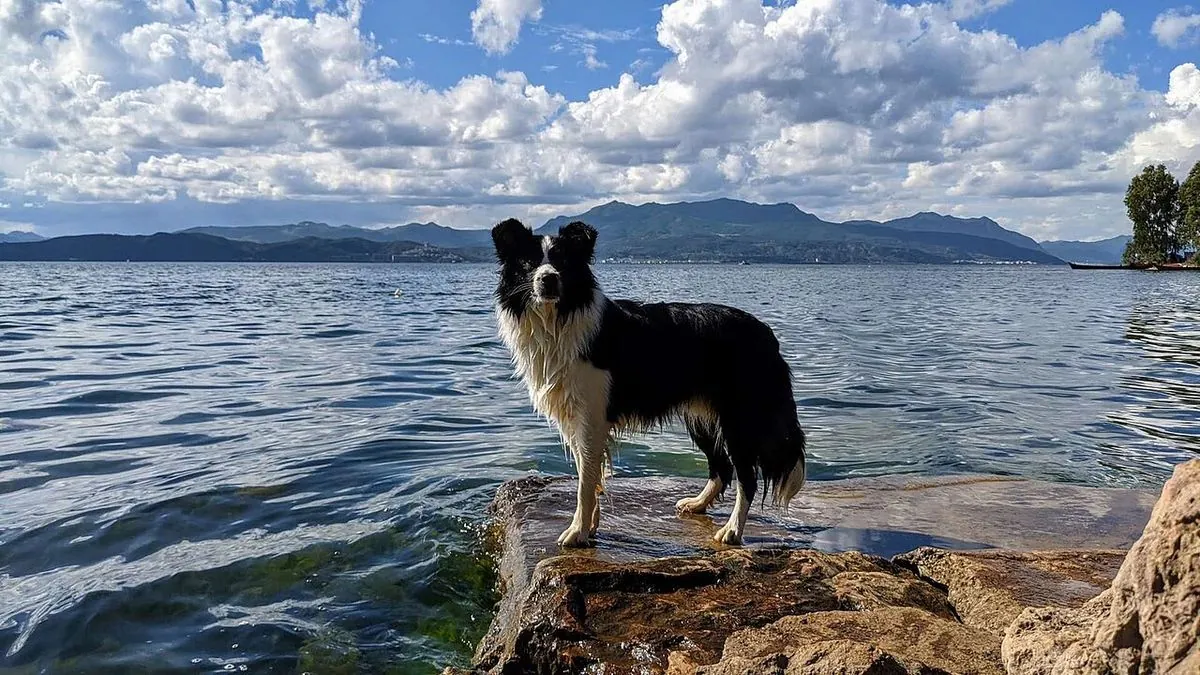
Swimming is hard work but low impact, so it’s easy on joints. That makes it great for seniors and for dogs recovering from injury, with your vet’s okay.
Pick clean water without strong currents or algae blooms, and rinse your dog afterward. A swim can also help loosen dead hair during a shed, which you can read about in our guide to Border Collie shedding.
Playing With Another Dog
A well-matched dog friend gives your Border Collie a play buddy for wrestling and chase games. Regular play dates or a second dog can take some pressure off you, but they don’t replace walks and training with you.
Agility
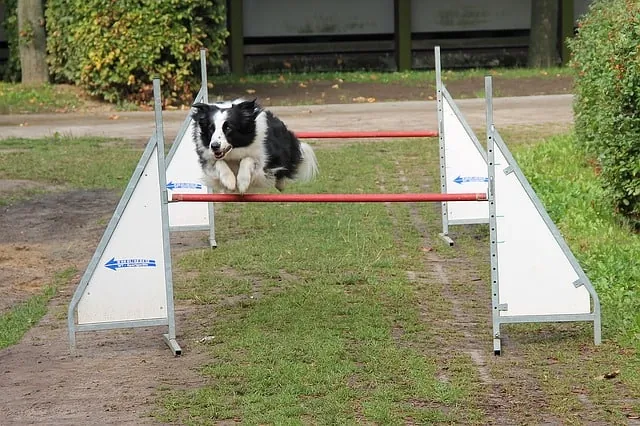
Agility mixes jumps, tunnels and weave poles, and Border Collies are among the top dogs in the sport. It works the body and the brain at the same time, because your dog has to listen to you while moving fast.
You can join a local class or set up a few simple obstacles in the backyard. Keep jumps low until your dog is fully grown.
Herding and Treibball
Herding is what Border Collies were bred for, and it’s tiring for body and mind. Most owners don’t have sheep, but many areas have herding instructors who offer lessons.
No sheep nearby? Treibball is a sport where your dog pushes big exercise balls into a goal on cue. It scratches the same itch without livestock.
Mental Exercises for Border Collies
Mental exercise is anything that makes your Border Collie think: learning, solving, searching. For this breed it’s as important as running. A dog that gets lots of physical exercise but no brain work often stays restless.
Tricks and Training
Basic obedience is a must, but Border Collies can go far past sit and shake. Teach them to put away toys, close doors, spin, weave through your legs or name their toys. The harder the trick, the more mental work it takes.
Shaping, where you reward small steps toward a behavior without luring, is especially tiring for them. Keep sessions to 5 to 15 minutes and end on a win.
Puzzle Toys and Snuffle Mats
Interactive toys let your dog work on its own. Treat-dispensing balls, puzzle feeders, hide-and-seek plush toys and snuffle mats all count. Feeding a meal from a puzzle toy turns dinner into a job. These are a lifesaver for dogs in apartments or on rainy days.
Hide and Seek
Ask your dog to sit and stay, then go hide in a closet or behind a door. Call “Find me!” and let your dog search. It might take a few tries to get the idea, but most Border Collies love it, and kids do too.
Scent Games
Hide treats around a room and tell your dog to “find it.” Start easy, in plain sight, then hide them under cups, behind furniture or in boxes. The shell game, where your dog picks the cup with the treat, works the same way.
Signs Your Border Collie Needs More Exercise
A Border Collie that isn’t getting enough exercise usually tells you through its behavior. Look for:
- Chewing furniture, shoes or walls
- Pacing, whining or not settling in the evening
- Barking at every sound (see why Border Collies bark)
- Herding or nipping at kids, other pets or cars
- Fixating on shadows, lights or flies
- Digging or trying to escape the yard
Signs of Too Much Exercise
Too much is possible too. Watch for limping, stiffness the next morning, worn or cracked paw pads, lagging behind on walks, or a dog that seems more wound up instead of calmer. Overtired Border Collies can get cranky and reactive, a lot like overtired toddlers. Add a rest day or swap a run for a sniff walk and brain games.
A Sample Daily Exercise Plan for an Adult Border Collie
Here’s what about two hours can look like on a normal weekday. Swap pieces around to fit your schedule.
| Time | Activity | About |
|---|---|---|
| Morning | Brisk walk or jog with some sniff time | 45 minutes |
| Breakfast | Meal served in a puzzle feeder | 10 minutes |
| Midday | Short potty walk, or a dog walker on long workdays | 15 minutes |
| Evening | Fetch, frisbee or play with a dog friend | 30 minutes |
| Night | Training session or scent games | 15 minutes |
Over time you’ll learn the right amount for your own dog. When it’s getting too little or too much, you’ll see it. Then adjust until your Border Collie is active outside and calm inside.
Border Collie Exercise FAQ
Do Border Collies need a lot of exercise?
Yes. Border Collies are one of the most active dog breeds and need around 1.5 to 2 hours of physical and mental exercise every day as adults. They were bred to herd sheep all day, so a short walk won’t satisfy them. Without enough activity, most develop problem behaviors like chewing, barking and herding people.
How much exercise does a 4 month old Border Collie need?
A 4-month-old Border Collie needs several short sessions a day rather than one long walk. Think short leash walks, free play on grass and a few 5-minute training games. Skip jogging, stairs and repeated jumping while its joints are growing. Stop when your puppy lags, lies down or gets nippy.
How much exercise does a 10 year old Border Collie need?
Most 10-year-old Border Collies still need daily exercise, but less of it and at a gentler pace. Two or three shorter walks, some swimming and plenty of brain games usually work well. Let your dog set the pace, and ask your vet if you notice stiffness, limping or slowing down on walks.
Is one walk a day enough for a Border Collie?
One walk a day is rarely enough for a Border Collie unless it’s long and you add other activity. Most do best with two walks a day plus play and training. On a day when you can only manage one walk, make it longer and add fetch, a puzzle toy or a short training session later.
Can a Border Collie get too much exercise?
Yes. Border Collies rarely stop on their own, so they can overdo it, especially in heat or with endless ball throwing. Too much exercise can cause sore joints, injured paw pads and a dog that is wired rather than calm. Puppies are most at risk, because repeated hard exercise can strain growing joints.
Is mental exercise as tiring as physical exercise?
For a Border Collie, mental exercise can be just as tiring as a run. Ten to fifteen minutes of training, scent games or a puzzle feeder can leave your dog ready for a nap. The best routine mixes both, because a dog that only runs gets fitter, while a dog that also thinks learns to settle.
Part 4: Start the Training
This is Part 3 of our series on adopting a Border Collie. Exercise and training go hand in hand, so Part 4 covers Border Collie training, starting with the first commands to teach.
Thank you, very very very very much for these awesome tips and everything on your page. I have spent like easily 5-6 hours reading your excellent detailed posts. I’m getting a puppy BC on Abril 23 and I live in 3 bedrooms apartment with a balcony and a terrace above and you talked about everything I was looking. Thanks!
*Also an Amazon Prime ”freak” 😂
You’re welcome, Angel! I hope everything goes well for you and your new puppy! 😀
Nice info! I had a red merle border that started bahaving badly and you’ve just taught me why! Thanks great info for my new blue merle border puppy!
Glad to hear it!
very informative from the start, I am currently having problems with my 8 month old bc not relaxing overnight, we are looking at increasing walks and further brain training in evening he currently has 20 min run with other dog in morning and then 1 hour walk and run with her in afternoon which doesn’t seem enough for him and when im home from work we do brain games through evening.
What do you mean by not relaxing? My collie moves all over the place at night from bed to floor back to bed. Is that what you mean? If so, that is completely normal.
Hi my name is Megan and I have a 1 year old bollie collie. Her name lexi and she love ball ha. But I don’t know why she don’t do anything during the day. I take her out once in the morning and once during the day but all the others time she just lay down. I tried playing with her. Everything but she seem to just lay down. She have her fun over the forest for a hour ish and she love it there. But that the only time she play.
Have you taken her to the vet? Do you think something is wrong with her? Maybe you just got a lucky one who doesn’t require hours of exercise 🙂
I have been over walking my border collie pup since it was around twelve weeks old. Between five and nine miles a day although l have let it run free so it has been doing more than that. It is now eight months old have I done it irreversable damage
Our 7 year old collie goes lame in her front paws after even a short walk. She’s been diagnosed with arthritis in her front paws (knuckle bones). She lives to play run and walk so now we’re devastated and don’t know whether to walk her far or not. Any advice please
I’m sorry, that is not fun for her. If you do some googling, you can find some good information. She definitely still needs exercise and play, but I would not do it like you used too.
That’s so sad to hear of your border collie having arthritis at 7. How do they go with swimming? It’s lower impact than walking/running which could be good not just as exercise, but also to allow your girl to do full range of movements of her legs. There’s lots of benefits to getting them swimming! Last thing you want is more issues because they cant get their natural movement right because of arthritis and it causing additional wear & tear elsewhere on their body.
Two things to look into is finding some kind of physio to work with your dog (I was surprised most physios in my area say to come in at lunchtime with my girl when the waiting room is empty of people clients for treatment) and if Zydax injections might be worth a go. I’m not going to say that either are right for you, but chat with your vet and do a little research yourself into both as a starting point. The reason I would say to look into it is my 7 year old border collie goes to a Bowen therapist for maintenance as she has done a lot of high impact work in her life which causes her back end to tighten up and we did a course of Zydax as a preventative measure for arthritis this year too. I won’t know the true benefits of the Zydax at this point being so early and being a preventative as opposed to potential treatment for arthritis, but the work with the Bowen therapist has helped keep my girl in great shape (both physically and biomechanically) and taught me how to properly massage her whole body to aid recovery for between our maintenance sessions. Plus because she gets regular daily massages by me (5 minutes a day) it means that those maintenance sessions are spaced further apart and it’s such a great bonding moment for us too.
I hope that gives some food for thought to finding a way to improve your girls quality of life with arthritis.
Hi! Thank you so much for this site! Do you plan on writing anything about rescue dogs? We just adopted a 4 year old with severe anxiety and fear. He loves us and our home but not sure about so much when it comes to training etc with a dog with these issues.
You’re welcome, Helen. As of right now, no, but there is plenty of great information out there. It takes a lot of time and hard work to help them be more confident again, but it is possible. My collie is a rescue as well and I had work for awhile to help him be more comfortable in his new environment, but years later he still gets triggered by certain things.
Hello, I have a short haired border collie who is nearly seven years old. She has a minimum of two hours exercise per day, sometimes three and is very fit and active. Although she is normally good natured she occasionally takes a dislike to dogs she has never met and can be unpredictable. Usually she’s not interested if she doesn’t know them, she’s more interested in her ball. Any tips please? Keeping her on a lead is not an option as she gets a lot of exercise retrieving her ball and would be very frustrated if she didn’t have a chance to run.
My collie is very unpredictable as well. He is fine with the majority of dogs, but every so often he will go off on one. We always have ours on a leash unless he is running around in the backyard. I have found that to be the best way to prevent unwanted incidences with other dogs
Wow I have 2 1/2 year old Border Collie his name is Finn. I wanted him get lack full engery until he get tired out. I am excited share this and am wanting him a good dog. Get a enough engery. I think best for him learn by me. My husband never do training him. I think take best take him with me. If he get much training.
I am so excited to work with my border collie once he is older. He is 9 weeks old now and knows “sit on your blanket,” sit, lay down, shake, “put your harness on,” and is eager to learn more.
I’m a little afraid of how much mental exercise he will need as he gets older!
My nearly 8 month old border collie was a rescue from a family who suddenly had I’ll health and didn’t have time for him, I’ve had him nearly 4 months now. He gets so tired after playing with other dogs for 30 mins once a week. It takes us another 30 minutes to walk home because he keeps laying down panting, it’s only a 5 min walk usually.
He has a 30 – 40 min walk in the morning and plays fetch in the garden during the day in between naps.
At first I think I was over doing it with him by 3 walks and play and he started to get naughty, guarding the sofa and biting, thinking he was boss put I slowed this gs down and was sterner with him, and now he’s getting a lot better. I’m just a little concerned whether this is a normal amount of time for him to be panting heavily. It really wears him out and he sleeps like a baby after.
I am very happy to read all this information.
Thank you so much for sharing the love for Border Collies!