
This is Part 6 of our series on adopting a Border Collie.
The best dog food for Border Collies is a complete and balanced food made for your dog’s life stage, from a company that can answer basic questions about who formulates and tests it. There’s no special Border Collie formula you need to hunt down. What matters more is how much you feed, because this breed gains weight fast when its work dries up.
Below you’ll find what to check on the label, a calorie chart by weight, a puppy feeding schedule, treat rules and how to switch foods without an upset stomach.
What Makes the Best Dog Food for Border Collies?
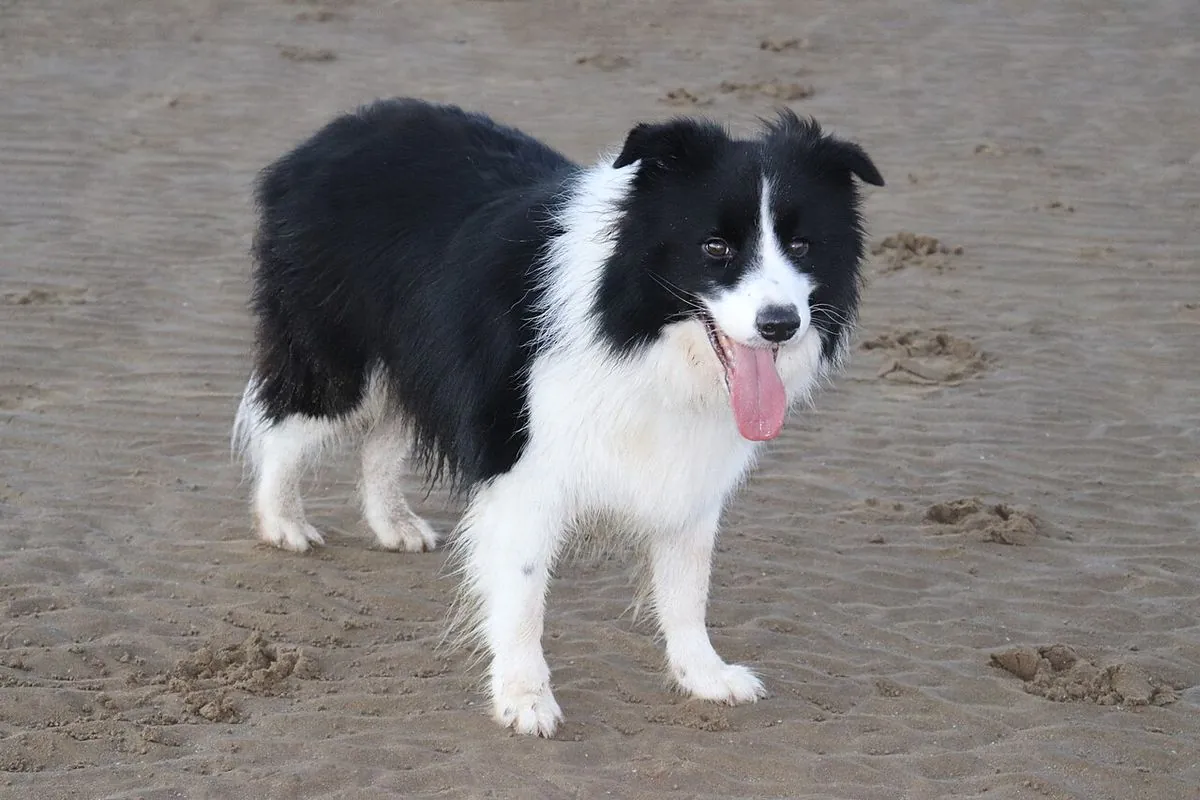
Border Collies are medium-sized herding dogs. Adult males usually weigh 31 to 55 pounds and females 26 to 42 pounds. Their nutrient needs are the same as any healthy dog of that size, so you can pick from regular dog foods instead of breed-branded ones.
Two checks separate a good food from a bag with nice marketing: the AAFCO statement and the company behind it.
Read the AAFCO Statement First
In the US, the nutritional adequacy statement is the small print on the back or side of the bag. AAFCO calls this statement the key to matching a food to your pet’s needs. You want to see the words “complete and balanced” and a life stage that fits your dog.
- “Growth” or “all life stages” works for puppies.
- “Maintenance” (or “adult maintenance”) is for grown dogs.
- “Formulated to meet” means the recipe was calculated to hit AAFCO nutrient levels.
- “Animal feeding tests” means real dogs ate the food in a trial.
If a product says “intermittent or supplemental feeding only,” it is not a full diet. Treats and toppers often carry that line.
Ask the WSAVA Questions
The World Small Animal Veterinary Association publishes guidelines on selecting pet foods. They focus on the company, not the ingredient list. A good maker should be able to answer these:
- Do you employ a full-time qualified nutritionist (a PhD in animal nutrition or a board-certified veterinary nutritionist)?
- Who formulates your foods?
- Do you run AAFCO feeding trials, or only formulate to meet the profiles?
- Where is the food made, and what quality control do you use?
- Will you give me the calorie content and a full nutrient analysis?
- What research have you done, and is it published?
“WSAVA approved” is not a real label. WSAVA doesn’t certify brands. It only tells owners what to ask, so treat any brand that claims a WSAVA stamp with some doubt and ask the questions yourself.
How Much Protein and Fat Does a Border Collie Need?
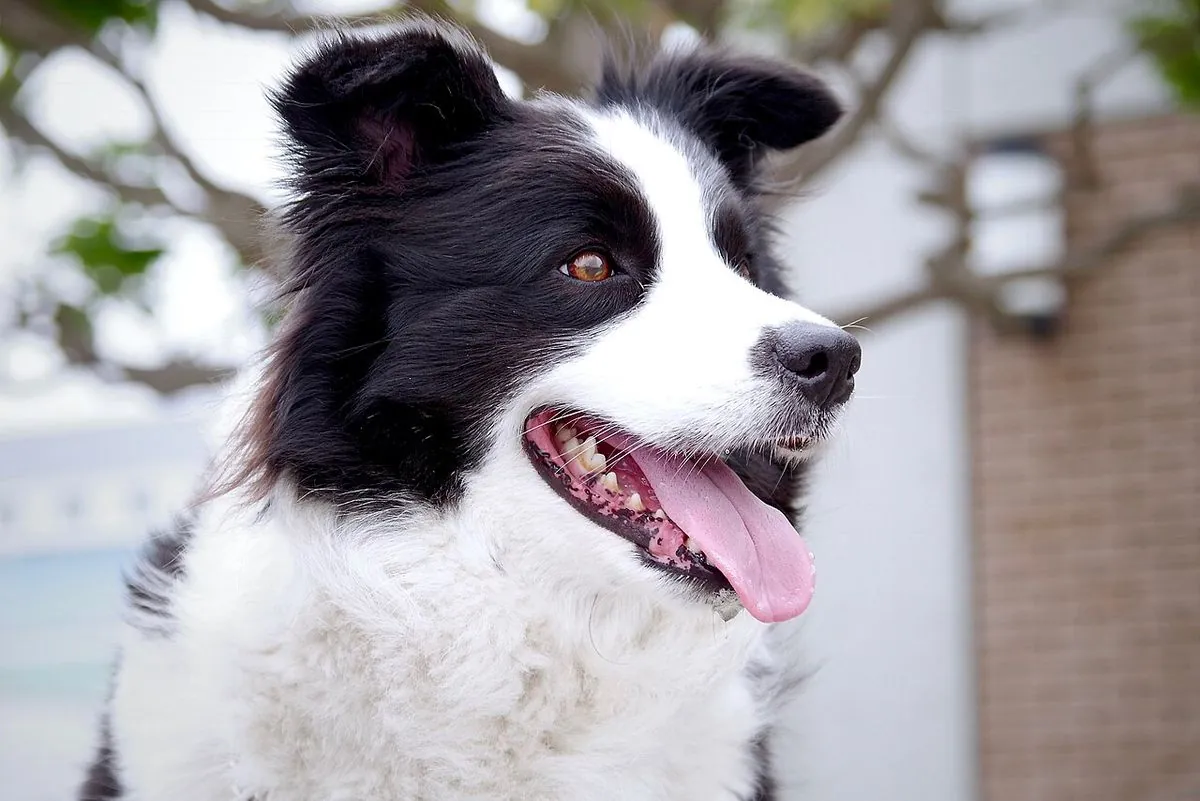
AAFCO sets minimums, measured on a dry matter basis. Adult maintenance foods need at least 18% protein and 5.5% fat. Growth foods need at least 22.5% protein and 8.5% fat. Almost every complete and balanced food clears these lines easily.
For a typical pet Border Collie that gets a couple of walks and a game of fetch each day, a standard adult food is fine. You don’t need a high-performance formula just because the breed has a reputation for energy.
Working stock dogs and dogs in serious agility or flyball training burn far more. Sport and performance formulas pack more fat, which means more calories per cup. That helps a dog who is working hard and struggles to keep weight on. For a couch-and-backyard dog, the same food tends to cause weight gain. Match the food to the work your dog actually does, and see the guide on how much exercise a Border Collie needs for a realistic picture.
Kibble, Wet, Fresh or Raw Food for Border Collies
Any of these can be complete and balanced. Each one has trade-offs in cost, storage and safety.
| Type | Upsides | Downsides |
|---|---|---|
| Dry kibble | Cheapest per calorie, easy to store, works in puzzle feeders | Easy to overfeed with a loose scoop |
| Canned or wet | Tasty, adds water, useful for picky eaters | Costs more, spoils once opened |
| Fresh cooked | Popular with picky dogs, pre-portioned | Expensive, needs fridge or freezer space |
| Raw | Some owners prefer it | Higher risk of Salmonella and Listeria for dogs and people |
On raw diets, the FDA’s advice is clear. It says raw pet food is more likely than processed food to carry Salmonella and Listeria monocytogenes, and freezing does not kill them. Dogs can carry those bacteria without looking sick and pass them to people, which matters if you have small children or anyone with a weak immune system at home. If you still choose raw, talk it through with your vet and handle it like raw meat in your own kitchen.
Should a Border Collie Eat Grain-Free Food?
Most Border Collies don’t need grain-free food. In July 2018 the FDA began looking into reports of dilated cardiomyopathy (DCM), a heart muscle disease, in dogs eating certain diets. Many were labeled grain-free and had peas, lentils, other legumes or potatoes high on the ingredient list.
The FDA has not shown that these foods cause DCM. In its December 2022 update it said report numbers alone don’t prove a link, and it would hold further public updates until there is meaningful new science. So the honest answer is “unresolved.” Unless your vet has a medical reason for grain-free, a food with grains is a reasonable default.
How Much Should a Border Collie Eat?
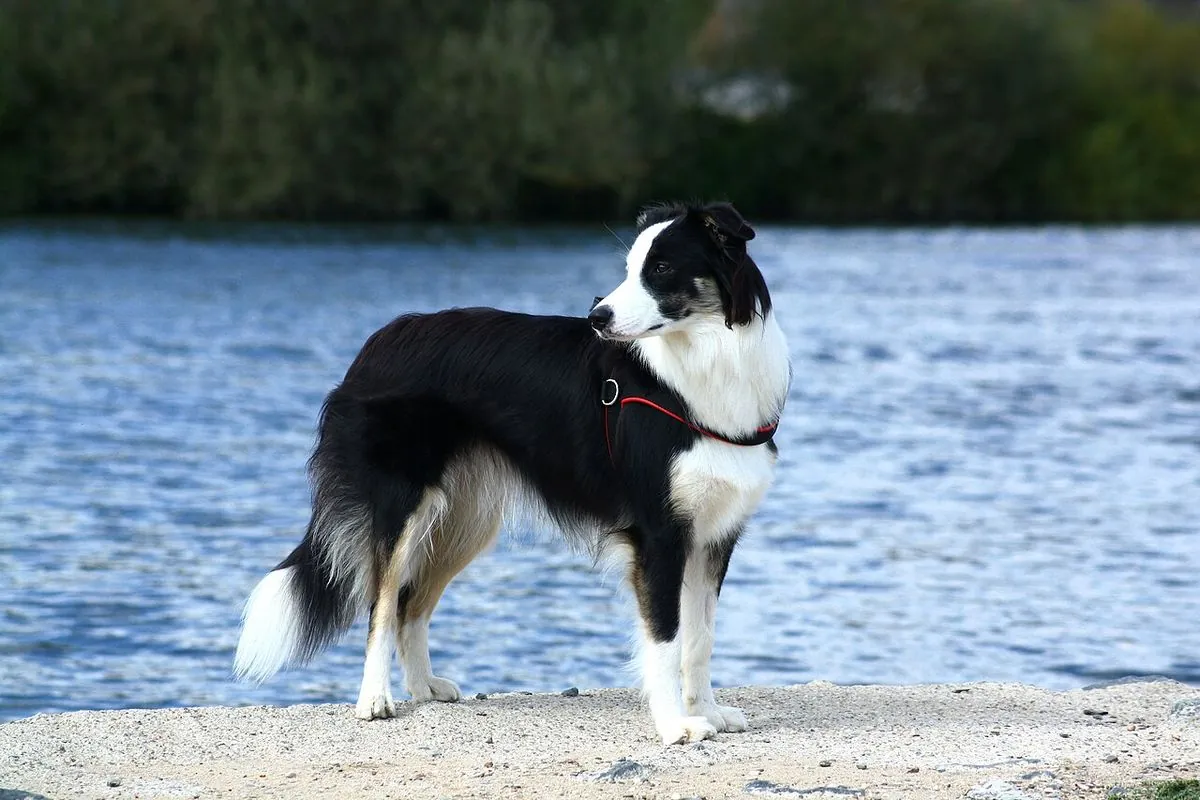
Most adult Border Collies need roughly 800 to 1,200 calories a day, which works out to about 2 to 3 cups of a typical dry food. The exact number depends on weight, activity and whether your dog is spayed or neutered.
Vets start with the resting energy requirement (RER): RER = 70 × (body weight in kg)0.75. The Merck Veterinary Manual then multiplies it by 1.4 for obesity-prone adults, 1.6 for neutered adults and 1.8 for intact adults. The chart below uses those numbers.
| Adult weight | RER (kcal) | Low activity or weight-prone (×1.4) | Typical spayed or neutered pet (×1.6) | Intact or more active (×1.8) | Rough cups per day at ×1.6 |
|---|---|---|---|---|---|
| 30 lb (13.6 kg) | 496 | 694 | 794 | 893 | 1.8 to 2.3 |
| 35 lb (15.9 kg) | 557 | 779 | 891 | 1,002 | 2.0 to 2.5 |
| 40 lb (18.1 kg) | 615 | 862 | 985 | 1,108 | 2.2 to 2.8 |
| 45 lb (20.4 kg) | 672 | 941 | 1,076 | 1,210 | 2.4 to 3.1 |
| 50 lb (22.7 kg) | 727 | 1,018 | 1,164 | 1,309 | 2.6 to 3.3 |
The cup ranges assume a dry food with 350 to 450 kcal per cup. Your bag lists its own kcal per cup, so divide your dog’s daily calories by that number. Then follow the bag’s feeding chart as a second opinion and adjust from there.
Treat these numbers as a starting point. Merck notes that any single dog may need up to 30% more or less than the formula says. Working sheepdogs and dogs in heavy sport training can need well above the ×1.8 column, so ask your vet to help set a target for a dog like that.
A kitchen scale is the easiest way to stay accurate, because scooped cups vary a lot. A cheap digital kitchen scale lets you weigh the daily ration once and keep it consistent.
Best Food for a Border Collie Puppy
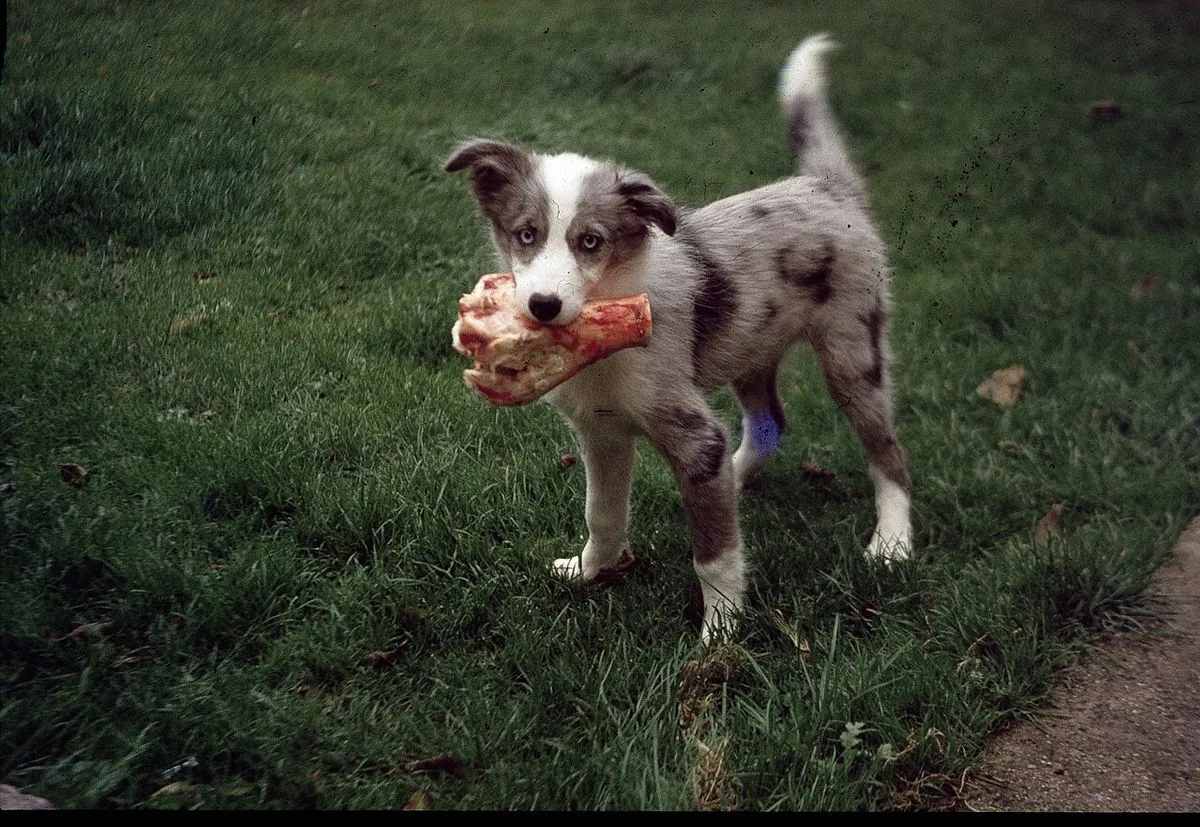
The best food for a Border Collie puppy is one labeled complete and balanced for growth or for all life stages. Puppies need more protein, fat, calcium and phosphorus than adults, and the growth profile covers that. Keep your puppy on growth food until roughly 12 months, then move to an adult food. Your vet can confirm the switch at the one-year visit.
Puppies burn energy fast. Merck puts their needs at about 3 × RER under 4 months of age and 2 × RER after that, based on current weight. Puppy food bags usually list amounts by age and expected adult weight, which is easier to follow day to day. The Border Collie puppy guide covers the rest of that first year.
Border Collie Puppy Feeding Schedule
| Age | Meals per day |
|---|---|
| 8 to 12 weeks | 3 or 4 |
| 3 to 6 months | 3 |
| 6 to 12 months | 2 or 3 |
| Adult | 2 |
Split the daily amount evenly across meals. A good sign that your puppy is ready to drop a meal is that it starts leaving food or seems less interested at one feeding for several days running.
Large Breed or Medium Breed Puppy Food?
Border Collies are a medium breed, so a regular puppy food is fine. AAFCO’s “large size dogs” wording applies to dogs expected to weigh 70 pounds or more as adults, and it mostly limits calcium for big, fast-growing breeds. A Border Collie won’t reach that size.
If you happen to buy a food that says “including growth of large size dogs (70 lb or more as an adult),” that’s still safe for a Border Collie puppy. Just skip calcium supplements, since a complete growth food already has enough.
Best Treats for Border Collies
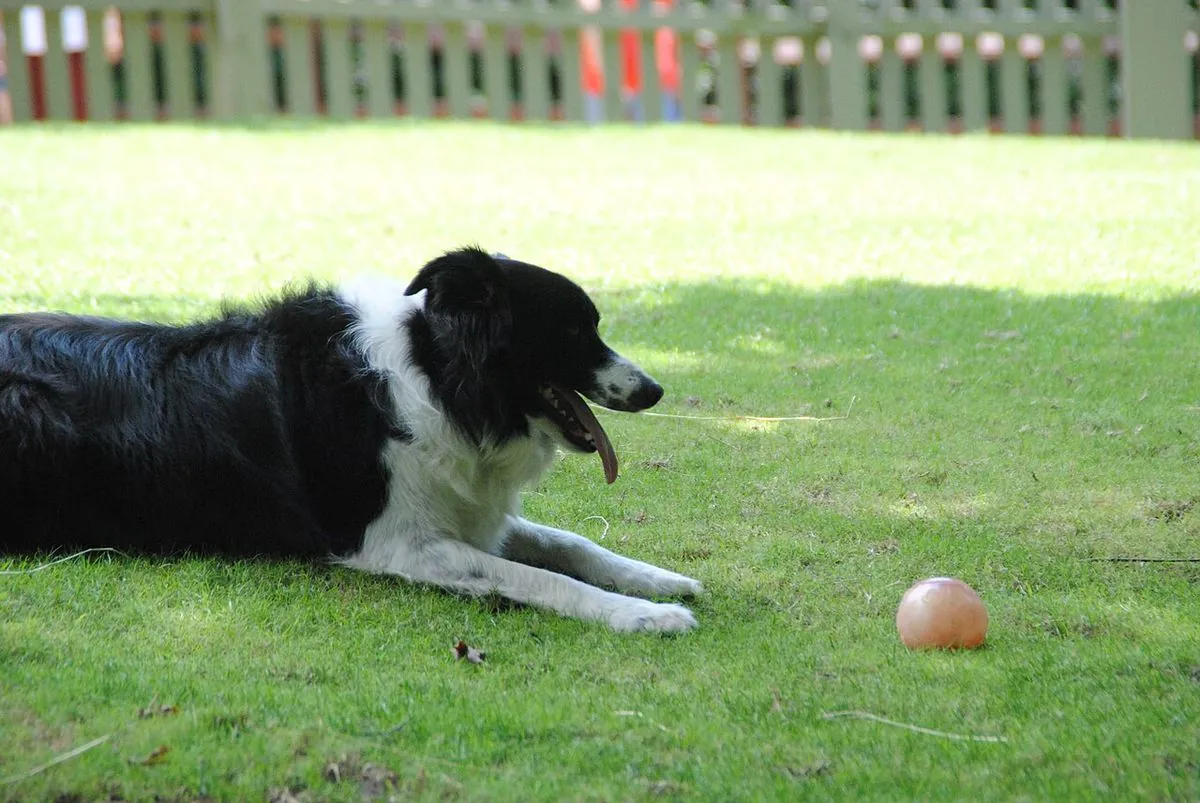
The best treats for Border Collies are small, low-calorie bites you can hand out often during training. Border Collies learn fast and work for food, so you’ll use a lot of treats. Keep each one about the size of a pea.
Follow the 10% rule. The UC Davis veterinary nutrition service and WSAVA both say treats should stay under 10% of daily calories. For a 40-pound pet eating about 985 calories, that’s under 100 calories of treats a day. Count chews, training rewards and the peanut butter you use for pills.
Healthy treat ideas:
- A handful of your dog’s own kibble, taken out of the daily ration
- Plain cooked chicken or turkey, no skin or seasoning
- Carrot slices or green beans
- Apple slices with the core and seeds removed
- Blueberries
- Freeze-dried single-ingredient dog treats, broken into small pieces
A treat pouch on your belt keeps rewards ready, so you can mark good behavior the second it happens.
Foods That Are Toxic to Dogs
The ASPCA’s list of people foods to avoid includes these:
- Chocolate, coffee and anything with caffeine
- Grapes and raisins
- Onions, garlic and chives
- Xylitol, a sweetener found in some sugar-free gum, candy and peanut butter
- Macadamia nuts and other nuts like almonds, pecans and walnuts
- Alcohol and raw yeast dough
- Avocado, citrus, salty foods and dairy
- Raw or undercooked meat, raw eggs and raw bones
Check the label on any peanut butter before you use it for treats or pills. If your dog eats something on this list, call your vet or an animal poison control line right away. Saving those numbers ahead of time is part of setting up vet care for your Border Collie.
Is Your Border Collie Overweight?
Vets use a body condition score (BCS) on a 1 to 9 scale, where 4 or 5 is ideal. Weight on the scale matters less than what you can see and feel.
- You can feel the ribs easily under a thin layer of fat.
- From above, there’s a clear waist behind the ribs.
- From the side, the belly tucks up toward the back legs.
A Border Collie’s coat hides a lot, so use your hands instead of your eyes. If the ribs feel buried, cut daily calories by about 10% and check again in a few weeks. Obese Border Collies face more joint and other health problems, which the guide to common Border Collie health problems covers in more detail.
Staying lean pays off over time. In a long-term Labrador Retriever study run by Purina, dogs fed 25% less than their littermates lived a median of 1.8 years longer. Diet is one of the few things you control in a Border Collie’s lifespan.
Slow Feeders and Puzzle Feeders for Fast Eaters

Many Border Collies inhale their food in seconds. A slow feeder bowl has ridges or a maze that makes your dog pick around for each bite. That stretches a meal from seconds to a few minutes.
A puzzle feeder goes a step further. Your dog has to slide, flip or roll something to get the kibble out, which gives a smart breed a job at mealtime. Feeding part of the daily ration this way is an easy way to burn mental energy on rainy days. For more ideas, see these toys for Border Collies, including food puzzles.
How to Switch Your Border Collie to a New Food
Change foods gradually over 7 to 10 days. A sudden swap is a common cause of loose stools and gas.
- Days 1 to 2: 75% old food, 25% new food.
- Days 3 to 4: half and half.
- Days 5 to 6: 25% old food, 75% new food.
- Day 7 onward: all new food.
If your dog has a sensitive stomach, stretch each step to three days. When you bring home a rescue, ask the shelter or foster what the dog has been eating and start with that, then switch slowly once things settle.
That wraps up the series. If you skipped a part, the full guide to adopting a Border Collie links every step, from supplies and dog-proofing to training and vet care.
Border Collie Food FAQ
What Is the Best Food for a Border Collie Puppy?
Pick a puppy food labeled complete and balanced for growth or all life stages under AAFCO standards. A regular puppy formula works because Border Collies are a medium breed. Choose a company that employs a qualified nutritionist and can share calorie and nutrient data, then keep your puppy on it until about 12 months.
How Many Cups of Food Should a Border Collie Eat a Day?
A typical spayed or neutered adult Border Collie eats about 2 to 3 cups of dry food a day, split into two meals. That’s based on roughly 800 to 1,200 calories and 350 to 450 kcal per cup. Check your food’s kcal per cup and adjust for your dog’s weight and body condition.
How Often Should I Feed My Border Collie?
Feed adult Border Collies twice a day. Puppies need more frequent meals: three or four a day from 8 to 12 weeks, three a day until around 6 months, then two or three until their first birthday. Keep meal times consistent, since a regular schedule also helps with house training.
Should Border Collies Eat Grain-Free Food?
Most Border Collies don’t need grain-free food. The FDA has looked into reports of heart disease (DCM) in dogs on diets heavy in peas, lentils and potatoes, many of them grain-free. No cause has been proven, but unless your vet recommends grain-free for a medical reason, a food with grains is a sensible choice.
What Are Good Treats for Border Collies?
Good treats for Border Collies are small and low in calories: pieces of their own kibble, plain cooked chicken, carrot slices, green beans, blueberries or single-ingredient freeze-dried treats. Keep all treats under 10% of daily calories, and never give grapes, raisins, chocolate, onions or anything sweetened with xylitol.